
Views: 0 Author: Site Editor Publish Time: 2026-09-16 Origin: Site
In critical fluid transfer and firefighting operations, the weakest link in the system is rarely the hose itself. It is the connection point. Coupling failures under high pressure lead to catastrophic operational downtime and severe safety hazards for personnel on the ground. Procurement and engineering teams face a constant challenge. They must balance strict budget constraints with the non-negotiable requirement for mechanical reliability. The primary decision often comes down to the manufacturing method of the aluminum fittings. This guide provides a data-driven, head-to-head evaluation of forged versus cast aluminum couplings. We detail metallurgical realities, performance under stress, and criteria for specifying the correct component for your operational environment.
A forged aluminum fire hose coupling delivers superior tensile strength and eliminates internal micro-porosity, making it the mandatory standard for high-pressure, heavy-duty, and life-safety applications.
A cast aluminum fire hose coupling offers a highly economical solution for standard-pressure, low-impact environments, allowing for complex geometries with lower upfront tooling costs.
Aluminum alloys provide a critical balance of reduced weight and corrosion resistance compared to heavier brass or cost-prohibitive stainless steel alternatives, significantly improving field ergonomics.
Coupling longevity relies heavily on matching the manufacturing process to the specific connection standard required (e.g., Storz, Machino, John Morris).
Mitigating supply chain risk requires partnering with a verified fire hose coupling manufacturer capable of providing complete material traceability and hydrostatic test certifications.
Casting involves heating aluminum until it reaches a fully molten state. Workers then pour this liquid metal into a pre-designed mold. Manufacturers typically use sand casting, permanent mold casting, or die casting depending on the production volume. The liquid metal fills the cavity and cools into a near-net shape. This method allows for highly intricate internal geometries. It easily forms complex water flow channels and internal locking mechanisms. Casting achieves specific surface finishes directly from the mold. It requires minimal secondary machining, which reduces upfront production time and lowers tooling expenses.
However, casting carries inherent metallurgical vulnerabilities. As molten aluminum cools from a liquid to a solid state, it shrinks. This cooling process often traps microscopic gas bubbles inside the metal. Engineers refer to this defect as micro-porosity. Shrinkage cavities can also form deep within the component walls where the metal cools unevenly. These internal voids create an inconsistent grain structure. They act as stress concentration points. Under high hydrostatic pressure, these weak points can rupture without warning. A cast fitting is appropriate for specific, controlled environments. You should specify them for agricultural fluid transfer, gravity-fed irrigation, or low-pressure municipal washdown. They also work well for standard commercial standpipes where pressure spikes remain minimal and predictable.
Forging takes a completely different metallurgical approach. The process starts with a solid extruded billet of high-grade aluminum. Manufacturers typically use 6000-series alloys, such as 6061. They heat the billet to a pliable state, usually around 750 degrees Fahrenheit, without melting it. Massive hydraulic presses then apply extreme mechanical force, often exceeding 1,000 tons of pressure. This force crushes the solid metal into the desired shape using precision steel dies. The extreme pressure fundamentally changes the internal crystalline structure of the aluminum.
This process creates a massive grain flow advantage. The internal grain structure of the metal aligns perfectly. It follows the exact contour of the coupling, including the locking lugs and threaded sections. This alignment results in superior impact resistance and maximum shear strength. More importantly, the immense pressure completely eliminates internal voids. There is zero micro-porosity in a forged component. The metal is dense, uniform, and highly predictable under stress. Following the forging process, the components undergo a T6 heat treatment. This involves solution heat treating and artificial aging to maximize tensile strength. You must specify a forged fitting for critical applications. They are strictly required for high-rise firefighting, industrial chemical transfer, and heavy-duty marine applications that demand absolute structural integrity.
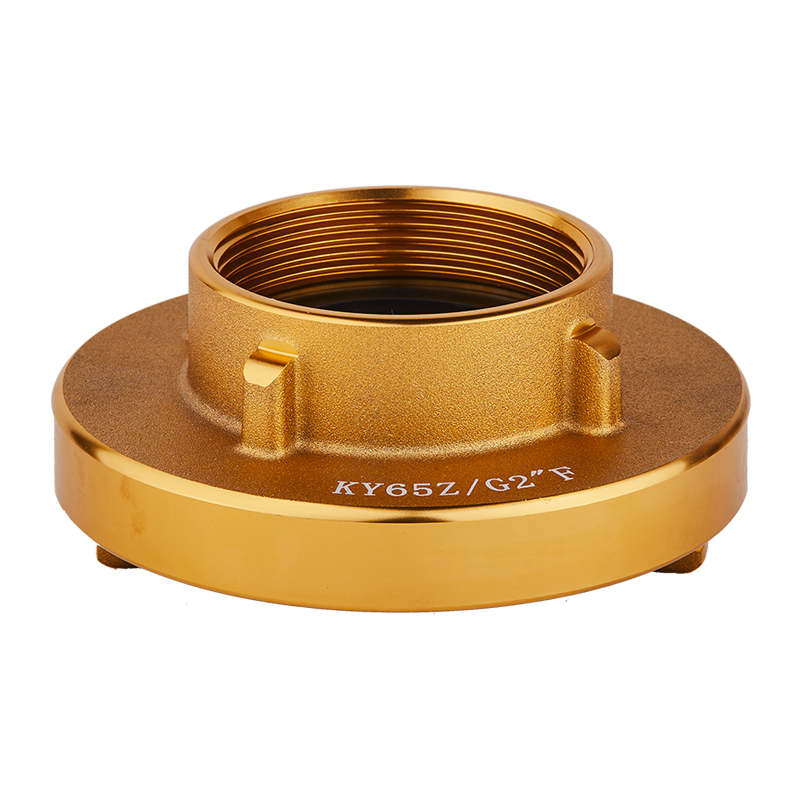
Field operators must deploy heavy hoses rapidly. Ergonomics directly impact deployment speed and operational efficiency. Aluminum is exceptionally lightweight compared to traditional brass. Brass is an alloy of copper and zinc, making it highly corrosion-resistant but incredibly heavy. Dragging a charged five-inch hose line with brass fittings across asphalt is physically exhausting. Reduced coupling weight improves practical field handling. It reduces operator fatigue during extended emergency responses. Lighter components also place less mechanical strain on the hose binding, extending the life of the hose jacket.
Engineers must weigh material trade-offs carefully. Stainless steel offers maximum absolute strength and durability. However, it is heavy and notoriously difficult to machine, which drives up production time. Brass resists corrosion well but adds unnecessary weight to the hose line. Forged aluminum provides the optimal intersection of properties. It delivers high tensile strength and excellent corrosion resistance. When treated with a hard-coat anodized finish, aluminum resists galvanic corrosion even when connected to dissimilar metals on fire hydrants. It maintains the operational mobility required for rapid deployment teams.
We must evaluate measurable strength metrics to understand field performance. Forged 6061-T6 aluminum boasts a yield strength of approximately 40,000 psi. Common cast alloys, like A356, typically yield around 20,000 to 24,000 psi. This massive difference dictates how the fitting behaves under load. The dense structure of forged aluminum handles extreme tension without stretching. It maintains dimensional stability under heavy loads, ensuring the connection remains watertight.
Burst pressure margins are critical for safety. Water hammer events cause massive, instantaneous pressure spikes in fluid systems. When a nozzle operator slams a valve shut on a flowing line, the kinetic energy of the moving water instantly converts to static pressure. A shockwave travels back down the hose, spiking pressures well over 500 psi in milliseconds. Cast components, with hidden porosity, can shatter unpredictably during these events. The lack of porosity in forged aluminum provides a higher safety factor. It absorbs this shock without yielding. Operators can trust the connection to hold when the pump pressure maxes out.
Implementation realities are harsh. Couplings endure severe physical abuse in the field. Operators drop them on concrete floors. Trucks drag them across rough asphalt. Heavy equipment occasionally strikes them during deployment. The material must survive blunt force impact without failing.
Forged and cast metals react differently to impact. Forged components possess high ductility. When struck by a heavy object, a forged lug tends to dent. It deforms slightly but remains intact. The operator can often still make the connection and flow water. Cast alternatives are inherently brittle due to their crystalline structure. Under extreme blunt force, they are prone to catastrophic cracking. A cracked lug means immediate failure. The hose line becomes entirely useless until you replace the coupling.
Performance Metric | Forged Aluminum (6061-T6) | Cast Aluminum (A356) |
|---|---|---|
Yield Strength | Approx. 40,000 psi | Approx. 24,000 psi |
Internal Porosity Risk | Zero (eliminated by extreme pressure) | High (inherent to the cooling process) |
Impact Resistance | High Ductility (dents or deforms under severe strikes) | Low Ductility (prone to brittle cracking and shattering) |
Grain Structure | Aligned with component geometry | Random and inconsistent |
Ideal Application | High-pressure, life-safety, heavy industrial | Low-pressure, agricultural, standard municipal |
The Storz fire hose coupling features a quarter-turn, sexless design. There are no distinct male or female ends. Operators simply align the lugs, push the faces together, and twist. This allows for incredibly fast connections in chaotic environments. It is the standard for large diameter hose (LDH) applications globally, particularly for municipal water supply lines.
This design relies heavily on interlocking lugs. When the hose charges with water, immense hydrostatic pressure attempts to push the couplings apart. The locking lugs endure massive shear stress. They also face severe rotational stress when operators use heavy spanner wrenches to break tight connections. Forging aligns the grain structure directly through these lugs. This provides the high shear strength required to keep the lugs intact. A cast lug on a Storz connection risks shearing off completely under high water pressure or heavy wrench torque.
The Machino fire hose coupling utilizes a push-in, quick-connect mechanism. It is widely used in Asian maritime and municipal fire systems. The operator pushes the male shank into the female receiver until it clicks. A spring-loaded ring locks the components together instantly. Disconnection requires pushing a release collar backward.
This mechanism demands precise dimensional tolerances. The internal rubber seating must compress perfectly to create a watertight seal. The locking groove on the male end requires exact geometry to engage securely with the retaining ring. Post-forge machining ensures these tight tolerances. Forged aluminum machines cleanly without exposing hidden air pockets or surface defects. This guarantees a leak-proof seal and smooth mechanical engagement every time you connect the hose. Cast components often reveal subsurface voids during machining, which can compromise the gasket seal.
The John Morris coupling is a British standard instantaneous delivery fitting. It features two spring-loaded catches on the female end. These catches engage a machined lip on the male end. You pull the release mechanisms back to disconnect the line. It is highly prevalent in Commonwealth fire services and offshore industrial applications.
Material choice directly impacts the longevity of this interlocking spring mechanism. The housing must withstand repeated mechanical snapping. It also faces harsh environmental conditions. Forged aluminum provides the structural density to anchor the spring mechanisms securely, preventing them from tearing out over time. Furthermore, high-grade forged alloys offer excellent resistance to galvanic corrosion. This is vital when operating in wet, salt-heavy marine environments where moving parts can easily seize up from salt exposure.
Vetting suppliers requires strict evaluation criteria. You cannot rely on visual inspections or marketing brochures alone. A qualified fire hose coupling manufacturer must hold active ISO 9001 certifications. They should operate in-house metallurgical laboratories equipped with optical emission spectrometers. Transparent supply chains are mandatory for critical safety equipment. You must know exactly where the raw aluminum billet originated and how it was processed.
Counterfeit products flood the industrial market. Unscrupulous suppliers often market high-grade cast products as "forged." They polish cast fittings heavily to mimic the smooth surface finish of a forged component. You must verify all manufacturing claims through official documentation. Demand material certificates before issuing a purchase order. A reputable supplier will gladly provide proof of their manufacturing processes and allow third-party audits of their facilities.
Partnering with an OEM fire hose coupling specialist provides significant value. Industrial facilities rarely use off-the-shelf solutions. You often need to adapt standard designs to specific operational requirements. An OEM partner can machine custom thread profiles, such as National Standard Thread (NST) or British Standard Pipe (BSP), to match legacy equipment. They can apply specialized Type III hard coat anodizing to enhance corrosion resistance in chemical plants.
OEMs can also adapt connection styles for specific facility installations. They can integrate grooved connections for rapid mechanical installation in pump rooms. They can manufacture heavy-duty flanged connections for critical, high-pressure stationary systems. You must demand non-negotiable quality control tests for all custom parts. Require hydrostatic pressure testing on a statistical sample of every batch. Mandate dye penetrant inspection to check for microscopic surface cracks. Always collect Material Test Reports (MTRs) to verify the exact chemical composition and heat treatment status of the aluminum alloy.
Audit your current fluid transfer systems immediately to identify any cast components operating in high-pressure or high-impact zones.
Define your exact maximum working pressure requirements and environmental abuse potential before specifying new coupling materials.
Request Material Test Reports (MTRs) and hydrostatic pressure test certifications from all shortlisted manufacturers to verify structural integrity.
Standardize your connection types across the entire facility to ensure rapid deployment compatibility during emergency operations.
A: A forged coupling delivers superior tensile strength and completely eliminates internal micro-porosity. This dense grain structure provides much higher resistance to cracking under blunt force impacts or severe hydrostatic pressure spikes.
A: They can be used safely in low-pressure or secondary washdown applications. However, forged aluminum remains the strict industry standard for primary attack lines due to its significantly higher safety margins and reliability.
A: Forged couplings typically feature smoother surface finishes and highly precise machined edges. Cast couplings may show minor surface pitting or faint mold parting lines. Because high-quality casting can mimic forging, material certifications are essential.
A: The locking lugs on Storz connections endure immense shear stress from both water pressure and spanner wrenches. Forging provides the necessary structural integrity to prevent these lugs from snapping under load.
A: Aluminum offers the best practical balance. It provides reduced weight for rapid field deployment and high corrosion resistance. Brass is significantly heavier, causing operator fatigue, and stainless steel is often cost-prohibitive.
A: You should always request Material Test Reports (MTRs) to verify alloy composition. Additionally, demand hydrostatic pressure test results and active ISO certification documents to ensure strict quality control standards.


