
Views: 0 Author: Site Editor Publish Time: 2026-09-30 Origin: Site
Wildland firefighting demands equipment that performs flawlessly under the most unforgiving conditions. Handcrews hike miles into steep terrain carrying heavy packs. Equipment weight, deployment speed, and mechanical reliability dictate tactical success. A compromised connection point halts operations. Specifying incorrect or substandard couplings introduces severe risks. Thread incompatibility between mutual aid agencies causes immediate deployment bottlenecks. Poor material finishes lead to thread galling, rendering hoses useless. Catastrophic blow-offs occur when inferior fittings fail under the intense stress of high-pressure portable pumps pushing water up extreme elevations. Procurement officers and equipment managers require a structured evaluation framework to assess materials, connection standards, sizing specifications, and manufacturing quality when sourcing a reliable forestry fire hose coupling.
Material Selection is Mission-Critical: Hardcoat anodized aluminum is the baseline for balancing burst pressure requirements with the strict weight limitations of wildland pack-outs.
Standardization Prevents Bottlenecks: Choosing between traditional threaded (NH/NST/NPSH) and quarter-turn quick connect systems requires auditing existing agency inventory and mutual aid agreements.
Attachment Integrity: The reliability of the coupling relies heavily on precise expansion ring installation, proper tooling, and adherence to NFPA 1963 and USDA Forest Service specifications.
Supplier Vetting: Partnering with an established OEM fire hose coupling manufacturer ensures consistent tolerance control, comprehensive technical documentation, and scalable procurement.
Forestry applications require baseline performance metrics that differ drastically from municipal or industrial hose requirements. Municipal engines typically operate near pressurized hydrants on paved surfaces, utilizing large-diameter supply lines. Wildland crews operate in austere environments, drafting water from shallow creeks and utilizing portable pumps to push water through thousands of feet of hose. This operational reality demands couplings engineered specifically for high-pressure relay operations, extreme abrasion, and rapid deployment.
Minimizing pack weight remains a primary objective for handcrews. Every ounce added to a hose pack increases fatigue during steep ascents. A standard 100-foot length of 1.5-inch single-jacket forestry hose weighs approximately 13 pounds uncoupled. Adding heavy fittings can push this weight significantly higher, draining energy fast when a firefighter carries three or four lengths. However, this weight reduction cannot sacrifice mechanical strength. The coupling must withstand the intense hydraulic pressure generated by series-connected portable pumps, which can exceed 300 PSI during tandem operations. Engineers balance this weight-to-strength ratio by utilizing advanced alloys and precision machining, ensuring the fitting handles high burst pressures without adding unnecessary bulk.
Matching the coupling to specific forestry hose constructions ensures operational safety. Wildland operations utilize various hose types, including single-jacket weeping hoses designed to self-protect against embers, and double-jacket synthetic hoses for high-pressure supply lines. Each construction type features distinct jacket thicknesses and internal diameters. The coupling bowl must match these exact dimensions. Incorrect bowl sizing prevents proper seating of the expansion ring, leading to catastrophic blow-offs when the line is pressurized.
The wildland environment subjects equipment to severe environmental and mechanical abuse. Crews drag hoses over abrasive granite outcroppings, through dense brush, and across burning terrain. Couplings endure extreme radiant heat and suffer blunt force impacts when dropped on rocks. Equipment managers must consult pressure derating charts when operating in extreme temperature environments, as elevated heat can alter the structural integrity of both the hose jacket and the metal fitting. Couplings must maintain their shape and thread integrity despite this continuous punishment.
Seamless integration across responding jurisdictions defines tactical efficiency. Wildland fires often require mutual aid from federal, state, and local agencies. A non-standard coupling halts water delivery instantly. The selected fittings must interface flawlessly with existing forestry hose networks, wyes, tees, and nozzles. Interoperability prevents delays, eliminates the need for complex adapter configurations on the fireline, and ensures continuous water flow during critical containment operations.
Municipal vs. Wildland Coupling Requirements | ||
Requirement | Municipal Firefighting | Wildland Firefighting |
|---|---|---|
Primary Material | Brass or standard aluminum | Hardcoat anodized 6061-T6 aluminum |
Weight Priority | Low (vehicle deployed) | High (handcrew pack-outs) |
Common Sizes (ID) | 2.5", 3", 4", 5" | 1", 1.5" |
Operating Pressures | 150 - 200 PSI | 250 - 380+ PSI (relay pumps) |
Abrasion Exposure | Asphalt, concrete | Granite, scree, heavy brush |
Modern wildland firefighting relies almost exclusively on extruded 6061-T6 aluminum for hose connections. This specific alloy provides the necessary tensile strength to handle high-pressure pump operations while keeping the overall weight low enough for extended pack-outs. The extrusion process aligns the grain structure of the metal, providing superior durability compared to cast aluminum alternatives. Cast fittings often contain microscopic porosity, making them susceptible to cracking under blunt force impacts. Extruded billet aluminum ensures the fitting survives the physical demands of remote fire suppression.
Raw aluminum remains highly susceptible to environmental degradation. Manufacturers must apply Type III hardcoat anodizing to the lightweight aluminum fire hose coupling. This electrochemical process creates an aluminum oxide layer on the surface, significantly increasing surface hardness. Hardcoat anodizing prevents thread galling, a condition where friction causes bare metal threads to seize together permanently. It also provides critical chemical resistance against corrosive fire retardants dropped from aircraft and prevents oxidation in damp storage conditions.
Untreated or poorly anodized aluminum degrades rapidly in field conditions. Scratches expose bare metal to moisture and chemicals, leading to pitting and structural weakness. Procurement teams must verify the anodizing thickness and quality during the selection process. High-quality aluminum couplings integrate secure locking mechanisms. Spring-loaded lugs or precision detents prevent accidental disconnection when crews drag charged lines aggressively through heavy timber and brush.
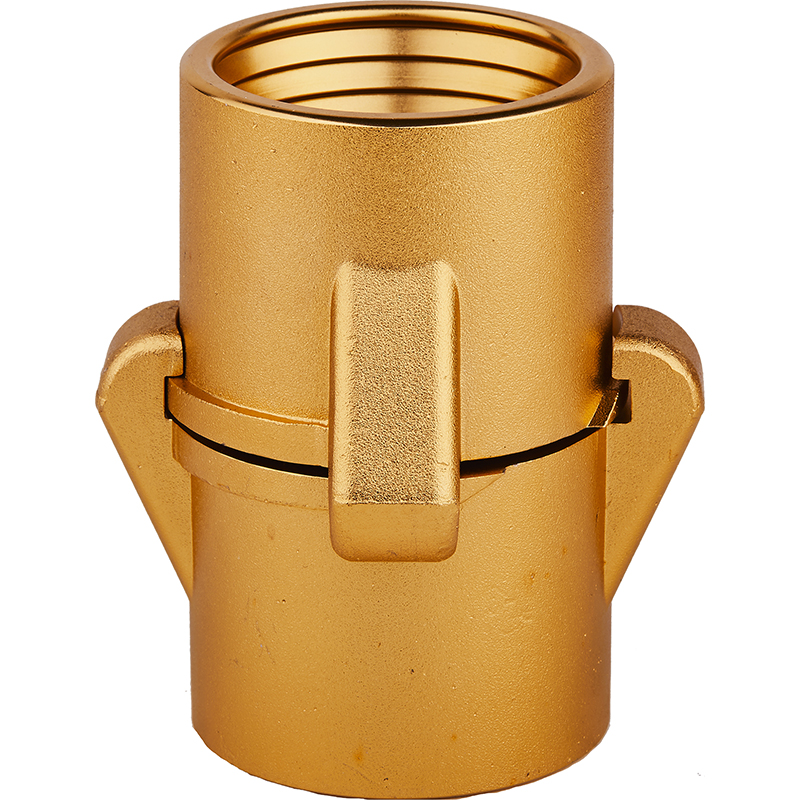
While aluminum dominates the wildland sector, brass retains utility in specific niche applications. Brass alloys, typically C36000 free-machining brass, offer exceptional corrosion resistance and natural lubricity. This natural lubricity prevents thread binding even without specialized coatings. Equipment managers often specify brass for connections permanently mounted to engine discharges, drafting operations in highly corrosive environments, or crossover marine applications where saltwater exposure is a primary concern.
The trade-offs of utilizing a heavy duty forestry coupling made of brass center entirely on weight. Brass is significantly denser than aluminum. While it offers superior thread durability and survives blunt force impacts better than aluminum, it introduces unacceptable weight penalties for long, steep hose lays. A handcrew carrying multiple lengths of brass-coupled hose will experience faster fatigue, reducing overall operational efficiency. Brass remains restricted to stationary or vehicle-mounted applications in the wildland sector.
Thread standardization dictates the success of mutual aid operations. The two dominant thread standards in North American firefighting are National Hose/National Standard Thread (NH/NST) and National Pipe Straight Hose (NPSH). NH/NST features a coarser thread pitch designed specifically for fire service applications, allowing for rapid threading and shedding of dirt. For a 1.5-inch connection, NH utilizes 9 threads per inch. NPSH utilizes the same thread pitch as standard iron pipe, featuring 11.5 threads per inch for a 1.5-inch connection, but relies on a gasket for sealing rather than a tapered thread.
Mixing these standards introduces severe compatibility risks on the fireline. An NPSH female coupling can technically thread onto a male iron pipe thread, providing versatility in certain drafting or industrial crossover scenarios. NH and NPSH are entirely incompatible with each other. Attempting to force an NH female onto an NPSH male will result in crossed threads, damaged fittings, and blown lines under pressure. Agencies must strictly audit their inventory to ensure absolute uniformity across all hose beds and appliances.
Quality threaded fittings feature a Higbee cut, also known as a blunt start thread. This design removes the thin, easily damaged leading edge of the thread. It prevents cross-threading during rapid connections in low-visibility environments. Manufacturers mark the start of this thread with a Higbee indicator, a small notch milled into one of the rocker lugs, allowing firefighters to align the threads by feel.
Thread Standard Compatibility Guide (1.5" Size) | |||
Thread Standard | Threads Per Inch (TPI) | Outside Diameter (Male) | Compatibility |
|---|---|---|---|
NH / NST | 9 | 1.990 inches | Only compatible with NH/NST |
NPSH / IPT | 11.5 | 1.877 inches | Compatible with NPSH and NPT (straight pipe) |
Many agencies are transitioning away from traditional threaded systems to quarter-turn forestry-specific and Storz-style quick connects. These sexless or gendered quick-action fittings require only a simple push and twist to lock securely. By eliminating threads entirely, these systems remove the risk of cross-threading in low-visibility, high-stress environments where fine motor skills degrade rapidly.
The operational outcomes of adopting a quick connect fire hose coupling are substantial. Crews drastically reduce hose deployment and retrieval times. Extending a hose line takes seconds rather than minutes. Adoption carries inherent risks. Agencies face significant transition costs when replacing legacy inventory. Crews must carry specialized threaded-to-quick-connect adapters to interface with neighboring jurisdictions or older apparatus that still utilize NH or NPSH standards.
Precision sizing prevents critical failures during water delivery. Forestry hoses typically utilize 1-inch or 1.5-inch Inside Diameter (ID) measurements. The coupling must match this exact Hose ID while simultaneously featuring the correct male and female fitting dimensions for the external connection. A mismatch of even a fraction of an inch in the coupling bowl will prevent the expansion ring from sealing the jacket against the fitting.
Clear identification protocols streamline procurement and maintenance. Standardized part numbers, comprehensive specification sheets, and permanent identification codes stamped directly onto the coupling prevent critical ordering errors. Equipment managers rely on these markings to verify thread pitch, bowl size, and manufacturing dates, ensuring only compatible and certified hardware reaches the fireline.
The integrity of a forestry hose coupling relies entirely on the expansion ring installation process. This industry-standard method secures the metal fitting to the synthetic or cotton hose jacket. Technicians insert a chamfered brass expansion ring inside the hose end, place the assembly into the coupling bowl, and use an expansion tool to press the ring outward. This action compresses the hose jacket tightly against the internal ridges of the coupling bowl, creating a perfectly tight, leak-proof fitting.
Tooling variations dictate the quality and consistency of the installation. Remote fire caches often rely on basic hand expanders. These manual tools require significant physical force and rely heavily on the operator's feel to achieve the correct expansion pressure. Maintenance depots and manufacturing facilities utilize hand-pumped or fully hydraulic expanders. These advanced machines provide precise, repeatable pressure control, ensuring uniform expansion across hundreds of assemblies.
Following a strict layout for expansion prevents catastrophic damage to the hose. Technicians must execute the following steps precisely:
Cut the hose end perfectly square to ensure even seating against the coupling gasket.
Measure the outside diameter of the hose and select a coupling bowl that provides a snug slip-fit.
Insert the brass expansion ring with the chamfered edge facing inward to prevent cutting the hose liner.
Position the expansion unit mandrel inside the ring and apply steady hydraulic pressure until the ring locks into the bowl ridges.
Inspect the internal waterway to ensure the ring expanded uniformly without warping or cracking.
Rigorous visual inspection criteria identify compromised couplings before they fail on the fireline. Crews must inspect fittings after every deployment. Technicians look for out-of-roundness caused by rock impacts, which prevents threaded couplings from mating properly. They check for damaged or flattened threads, missing or degraded rubber gaskets, and malfunctioning spring-loaded locking arms on quick-connect systems.
Agencies must determine the feasibility of field repairs versus depot-level recoupling. Replacing a missing gasket or cleaning debris from threads takes seconds in the field. Correcting an out-of-round coupling or replacing a blown expansion ring requires specialized tooling unavailable on the fireline. Damaged hoses must be rolled, tagged out of service, and returned to the maintenance depot for professional recoupling and subsequent hydrostatic testing.
Procurement teams must distinguish between a true Original Equipment Manufacturer (OEM) and a white-label distributor. Distributors purchase pre-manufactured goods and rebrand them, offering little control over the manufacturing process. A true OEM controls the entire production lifecycle, from raw material sourcing to final anodizing. This direct control ensures consistent quality across large procurement orders.
Evaluating an OEM fire hose coupling manufacturer requires analyzing their facility capabilities. In-house CNC machining centers guarantee tight dimensional tolerances, preventing the loose fits that cause leaks. In-house anodizing controls ensure the Type III hardcoat meets strict military or fire service specifications. A capable OEM offers custom thread milling, allowing agencies to order specialized fittings tailored to unique regional thread standards or legacy equipment requirements.
Validating compliance with industry standards protects agencies from liability and equipment failure. Procurement officers must verify that the fittings meet NFPA 1963 (Standard for Fire Hose Connections). For federal wildland applications, compliance with USDA Forest Service Specification 5100-108 is often mandatory. These standards dictate metallurgical properties, thread dimensions, and performance baselines under extreme pressure.
A reputable fire hose coupling supplier provides comprehensive technical documentation upon request. This documentation includes hydrostatic burst testing reports demonstrating the fitting's ultimate failure point. Suppliers must provide material certifications proving the use of 6061-T6 aluminum, precise dimensional drawings for engineering review, and pressure derating charts for operations in elevated temperatures.
Seasonal fire activity places massive strain on manufacturing supply chains. During peak fire seasons, demand for replacement hoses and couplings skyrockets. Suppliers lacking robust inventory management systems will experience severe backorders, leaving agencies without critical equipment when they need it most. Procurement teams must evaluate a supplier's historical performance during these surge periods.
A reliable manufacturer maintains adequate safety stock of raw materials and finished goods. They possess the manufacturing scalability to deliver high-volume orders rapidly without sacrificing quality control. Establishing long-term procurement contracts with a stable supplier ensures priority fulfillment during extreme fire years, keeping apparatus fully stocked and ready for deployment.
Audit your current inventory to identify all existing thread standards and exact hose outside diameters before initiating new procurement orders.
Request physical coupling samples and hydrostatic burst test reports from shortlisted manufacturers to verify machining tolerances and material strength.
Standardize your maintenance depot tooling by upgrading to hydraulic expansion units that guarantee repeatable, leak-proof ring installations.
Establish a direct procurement channel with a verified OEM manufacturer to secure priority lead times during peak fire season surges.
A: Forestry couplings prioritize extreme weight reduction for wildland pack-outs. They feature smaller internal diameters, typically 1-inch or 1.5-inch, and utilize hardcoat anodized aluminum to withstand abrasive terrain. Municipal couplings are larger, heavier, and designed for high-volume hydrant supply lines on paved surfaces.
A: Yes, but it requires specialized threaded-to-quick-connect adapters. While quick connects drastically improve deployment speed and eliminate cross-threading, adding adapters introduces minor length and weight penalties. Agencies must weigh these operational trade-offs when transitioning their inventory.
A: Type III hardcoat anodizing prevents thread galling, which causes bare metal threads to seize. It significantly increases surface hardness to protect against rock impacts and provides critical chemical resistance against corrosive aerial fire retardants and moisture.
A: The most common are National Hose (NH/NST) and National Pipe Straight Hose (NPSH). Regional standardization is critical because NH and NPSH are incompatible. Agencies must ensure all male and female fitting sizes match perfectly to prevent blown lines.
A: Couplings require visual inspection after every incident and formal annual testing per NFPA 1962 guidelines. Technicians must check for out-of-roundness, damaged threads, gasket integrity, and the proper function of any spring-loaded locking mechanisms.
A: Prioritize manufacturers with ISO certifications, strict adherence to NFPA 1963, and in-house CNC machining capabilities. Look for transparent material sourcing, the ability to hold tight manufacturing tolerances, and the ready availability of detailed technical specification sheets.


