
Views: 0 Author: Site Editor Publish Time: 2026-08-19 Origin: Site
The failure point in any fluid transfer system is rarely the hose itself. It is the speed, reliability, and compatibility of the connection under immense pressure. Selecting between regional standards and universal quick-connects dictates operational efficiency, cross-departmental compatibility, and safety on the fireground. Incompatible fittings during high-stress deployments or mutual aid scenarios cause catastrophic delays. When pump operators cannot secure a water supply, the entire operation halts. This technical guide evaluates the mechanical differences, operational trade-offs, and system integration requirements of these two distinct connection standards. We analyze the engineering behind a Machino vs Storz coupling setup to determine the optimal fit for your infrastructure and risk profile. Proper selection prevents critical failures in your emergency response networks and ensures seamless water delivery when seconds matter most.
Storz couplings utilize a symmetrical, genderless, quarter-turn connection, making them the industry standard for large-diameter hoses (LDH) and rapid, error-free deployment.
Machino couplings feature a push-to-connect, gendered design prevalent in Asian and maritime markets, offering instantaneous single-handed connections for small to medium-diameter lines.
Material selection—specifically utilizing a forged aluminum fire hose coupling over cast metals—significantly impacts long-term durability, weight, and pressure tolerance.
System standardization requires auditing existing infrastructure, regional compliance requirements, and sourcing from a verified OEM fire hose coupling provider to mitigate compatibility risks.
Modern fluid transfer operations require rapid deployment protocols. Traditional threaded couplings present significant cross-threading risks during chaotic situations. They slow down connection times during emergencies and require fine motor skills that degrade under stress. Transitioning to a threadless quick connect fire hose coupling solves these mechanical issues. You must prioritize connection speed and operational safety above all else. Upgrading your hardware requires a thorough understanding of your current limitations. You cannot improve what you do not measure accurately on the training ground.
Establish clear metrics for success before upgrading your system infrastructure. Track your time-to-water metrics during routine training drills. Measure the maximum working pressure of your primary supply lines. Identify the burst pressure limits required by your local safety regulations. Evaluate environmental resilience against saltwater, grit, and harsh industrial chemicals. These baselines dictate your specific hardware requirements. A coupling failing under pressure endangers lives and property immediately. You must engineer your system to handle worst-case scenarios safely without relying on best-case conditions.
Mixing coupling standards creates severe operational hazards for responders. Maritime port-state controls frequently document mismatched equipment on commercial vessels. Municipal mutual aid responses fail when neighboring departments use incompatible threads. You must deploy proper adapters if regional standards vary. Without adapters, responders cannot establish reliable water supplies quickly. This leads to increased property damage and severe safety risks. Standardizing your equipment across all departments eliminates this dangerous guesswork entirely.
Consider the ergonomics of your apparatus hose storage. Coupling bulk directly impacts how hoses pack into tight compartments. Narrow preconnect hosebeds restrict the use of bulky external fittings. Certain threadless quick-connect profiles fit poorly in these confined spaces. Lower-profile threaded alternatives sometimes save valuable storage room on trucks. You must balance deployment speed against physical storage constraints. Evaluate your apparatus layout carefully before committing to a specific standard. Proper hosebed packing ensures smooth lines during rapid forward lays.
Time-to-water metrics during zero-visibility deployments.
Maximum working pressure thresholds for primary supply lines.
Burst pressure limits required by municipal safety regulations.
Environmental resilience against saltwater, grit, and industrial chemicals.
Ergonomic compatibility with existing apparatus hosebeds.
The Machino system relies on a straightforward mechanical concept. It uses a gendered push-to-connect architectural design. The male plug inserts directly into the female receptacle smoothly. An internal spring-loaded locking ring secures the connection instantly. Rubber gaskets compress internally to create a watertight seal. This design requires minimal physical force to engage fully. Operators simply push the two ends together until they click. The mechanism relies entirely on internal friction and spring tension to hold back hydrostatic pressure.
This standard dominates specific global regions and industries. You will find it prevalent across Japan and Southeast Asia. Commercial marine applications frequently specify this hardware for vessel fire mains. It performs best in small to medium-diameter fluid transfer applications. Typical hose sizes range from 1.5 inches to 2.5 inches. The compact profile suits interior firefighting operations perfectly. Shipboard crews rely on it for rapid deployment in narrow passageways. It remains a staple in Asian industrial safety systems where space is limited.
The Machino fire hose coupling offers distinct operational advantages. The instantaneous push-connection saves crucial seconds during initial attack phases. The mechanism feels highly intuitive for new operators and civilian volunteers. Firefighters can easily operate it while wearing heavy structural firefighting gloves. Single-handed connections are entirely possible in tight, restricted spaces. This speed provides a massive tactical advantage during escalating fire conditions. Rapid water application stops fire progression in its earliest stages before flashover occurs.
However, the design presents specific mechanical limitations. The gendered architecture requires correct orientation before making the connection. Matching male to female ends costs time during chaotic, low-visibility deployments. Internal springs remain vulnerable to severe environmental contamination. Debris, sand, and salt crystallization can jam the locking ring completely. Regular maintenance is absolutely mandatory for reliable performance. You must keep the internal components clean and well-lubricated. Neglecting these maintenance routines guarantees a failure when you need water most.
Flush the female receptacle with fresh water after every deployment.
Inspect the internal locking spring for rust or binding.
Lubricate the moving parts with approved silicone spray.
Replace rubber gaskets showing signs of dry rot or cracking.
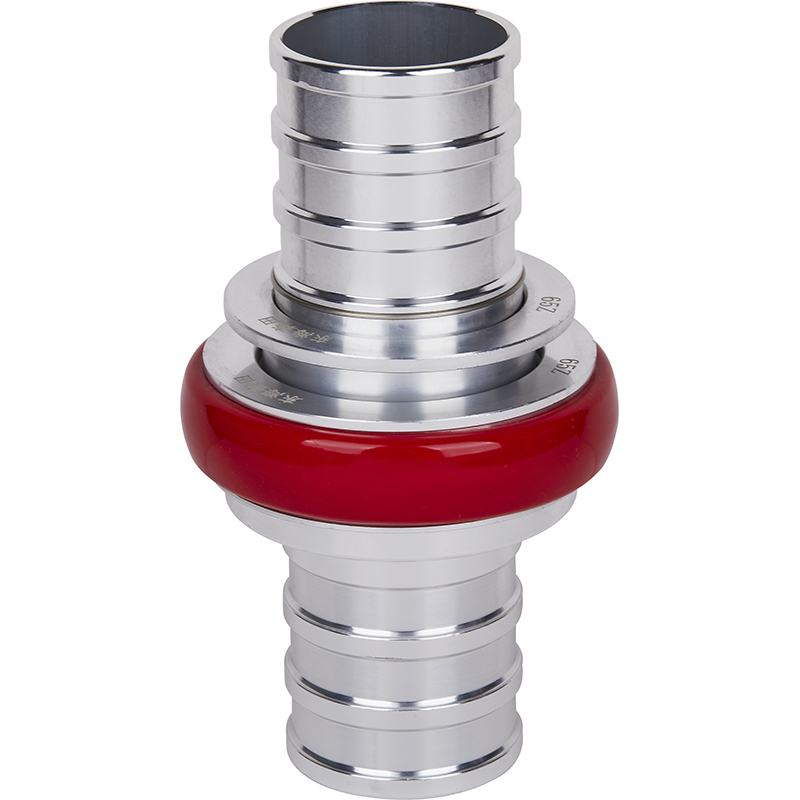
The Storz standard provides a completely genderless architectural design. Both coupling heads utilize identical locking faces and internal gaskets. The system relies on precise lug and slot engagement. Operators lock the connection using a simple 90-degree twist. This quarter-turn mechanism guarantees a secure, uniform seal every time. The interlocking metal lugs distribute hydrostatic pressure evenly across the joint. This prevents catastrophic blowouts during high-pressure pumping operations. The design eliminates the need to match specific hose ends during a chaotic forward lay.
Integration with fixed infrastructure is highly streamlined and efficient. Facilities use female and male threaded Storz adapters everywhere. These adapters transition flexible fire hoses to rigid piping networks. You can connect them to PVC or industrial manifolds easily. Municipal hydrants frequently feature these connections for rapid access. This creates a unified water delivery network across entire cities. Industrial plants use them to standardize their chemical transfer lines. The adapters provide a permanent, reliable anchor point for flexible hoses.
Regional dominance heavily favors the Storz fire hose coupling globally. It serves as the primary standard across most of Europe. United States departments universally adopt it for large diameter hoses (LDH). Heavy industrial fluid transfer operations rely on its rugged durability. It handles massive water volumes safely and efficiently. Refineries and chemical plants specify Storz for high-volume foam delivery systems. Its universal adoption makes mutual aid operations significantly smoother. Responding agencies share water supplies without worrying about thread compatibility.
Operational advantages heavily outweigh the minor drawbacks. The genderless design eliminates orientation errors entirely. Any hose end connects seamlessly to any other end. The external locking mechanism resists dirt and debris effectively. It provides superior performance for large diameters up to six inches. The system does have minor operational limitations. Operators often require spanner wrenches for final tightening. Ensuring a perfect seal sometimes demands mechanical leverage. Uncoupling under residual pressure also requires specialized hand tools. The external profile is bulkier than traditional threaded options.
Align the locking lugs of both hose ends visually.
Press the two faces together firmly to compress the internal gaskets.
Twist the couplings clockwise a quarter-turn until the lugs engage the slots.
Apply a spanner wrench to lock the connection fully and prevent vibration back-off.
Connection speed directly impacts emergency response outcomes. The Machino standard utilizes a linear push-to-connect motion. This allows for near-instantaneous engagement in clean environments. The Storz standard requires a rotational quarter-turn motion. The push motion feels faster in highly controlled training environments. However, the genderless Storz design reduces cognitive load significantly. Firefighters do not waste time finding the correct hose end. Zero-visibility deployments favor the genderless approach heavily. You simply grab two ends and twist them together without checking orientation.
Pressure ratings dictate system safety margins during pumping operations. Manufacturing specifications govern these critical performance metrics strictly. The DIN 14320 standard regulates Storz manufacturing tolerances and material strength. The JIS B9911 standard controls Machino production requirements and testing protocols. Both systems handle standard municipal working pressures easily. Storz mechanisms manage water hammer and pressure surges exceptionally well. The interlocking lugs distribute mechanical stress evenly across the fitting. Machino connections handle vacuum conditions during drafting operations effectively.
Environmental durability separates the two designs significantly. Machino internal mechanisms face severe vulnerabilities in harsh environments. Sand and grit easily foul the internal spring rings. Saltwater exposure accelerates corrosion inside the female receptacle. Storz couplings feature an easily cleanable external lug system. Operators can visually inspect the locking surfaces instantly. Mud and debris wipe away from the Storz face quickly. You cannot easily clean the inside of a jammed Machino fitting. This makes Storz superior for wildland and heavy industrial applications.
Technical Specifications Comparison
Feature | Machino Standard | Storz Standard |
|---|---|---|
Connection Type | Push-to-connect (Linear) | Quarter-turn (Rotational) |
Design Architecture | Gendered (Male/Female) | Genderless (Symmetrical) |
Optimal Hose Size | 1.5" to 2.5" (Small/Medium) | 4" to 6"+ (Large Diameter) |
Debris Resistance | Low (Internal springs vulnerable) | High (External lugs easily cleaned) |
Primary Regions | Japan, Southeast Asia, Marine | Europe, USA (LDH), Industrial |
Maintenance Needs | High (Internal lubrication required) | Low (Visual inspection and gaskets) |
Material selection dictates how long your hardware survives on the apparatus. Traditional cast brass and bronze are heavy and cumbersome. Modern fluid transfer systems rely on advanced metallurgical solutions. A forged aluminum coupling reduces overall weight significantly. This weight reduction prevents firefighter fatigue during long, grueling operations. Forged aluminum also provides exceptionally high tensile strength. It resists deformation under extreme hydrostatic pressure. The forging process aligns the metal grain structure perfectly. This eliminates the microscopic voids often found in cast metals.
Marine and chemical environments demand superior corrosion resistance. Manufacturers apply hard-coat anodization processes to aluminum components. This chemical treatment creates a durable, protective oxide layer. It prevents saltwater from degrading the metal surfaces over time. Anodized aluminum outlasts untreated alloys in harsh industrial applications. You must specify this surface treatment for coastal operations. Bare aluminum will suffer from severe galvanic corrosion near saltwater. Proper anodization ensures your couplings survive decades of abuse on the fireground.
Evaluating your supply chain is a critical safety step. Sourcing directly from a certified fire hose coupling manufacturer is essential. Direct sourcing ensures precise CNC machining tolerances. Tight tolerances guarantee leak-free quick connections under pressure. Poorly machined knock-offs will fail under sudden pressure surges. You cannot trust unverified suppliers with life-safety equipment. A single catastrophic failure can cause severe injuries to your personnel. Quality control must remain your highest priority during procurement.
You must identify and verify critical manufacturing certifications. Request documentation for ISO 9001 quality management systems. Verify strict compliance with DIN or JIS dimensional standards. Look for UL or FM approvals for fire protection applications. These certificates prove the manufacturer adheres to strict safety protocols. Never compromise on certified hardware for your life-safety systems. Request physical material test reports for every batch of couplings. This guarantees the metallurgical composition meets your exact specifications.
Managing cross-standard compatibility requires strategic logistical planning. Operating in mixed-standard environments presents constant operational challenges. A vessel equipped with Machino hydrants may dock anywhere globally. The local port might exclusively utilize Storz connections for shore power. This mismatch prevents immediate shore-to-ship water supply during emergencies. You must anticipate these regional differences before deploying your assets. Failure to plan for incompatibility leaves your facility highly vulnerable. Standardizing your internal network is only the first step.
You must deploy proper adapters strategically across your infrastructure. Keep Machino-to-Storz adapters readily available at all connection points. Train personnel on the associated pressure-loss considerations. Every adapter introduces slight friction loss into the fluid system. Calculate these hydraulic losses when designing your pumping operations. Ensure your adapters match the pressure ratings of your primary hoses. Store these adapters in clearly marked, weatherproof containers. Quick access to the right adapter saves critical minutes during a crisis.
Maritime requisitioning demands absolute precision from purchasing departments. Seafarers and port engineers must verify exact coupling specifications. Requisition orders must state the standard, size, and thread type clearly. A vague order results in critical mismatches at sea. Establish strict best practices for your supply chain management. Require photographic verification of existing couplings before ordering replacements. Measure the lug distances precisely using digital calipers. This prevents costly returns and dangerous operational delays.
Lifecycle maintenance ensures long-term operational readiness. Machino systems require regular spring lubrication and internal cleaning. Storz systems primarily need routine gasket replacements and visual inspections. Evaluate the training requirements for your maintenance personnel. Transitioning between different coupling types requires updated standard operating procedures. Document all inspection routines clearly for your maintenance crews. Schedule quarterly hydrostatic tests to verify seal integrity under pressure. Replace any hardware that shows signs of metal fatigue or thread wear immediately.
Audit your current apparatus hosebeds to determine maximum coupling profile clearances.
Request hydrostatic test data and material certificates from your chosen manufacturer.
Procure physical samples to verify thread compatibility with your existing municipal hydrants.
Update your standard operating procedures to include specific maintenance protocols for the new hardware.
A: No. They utilize fundamentally different mechanical designs. Storz relies on a genderless quarter-turn mechanism, while Machino uses a gendered push-to-connect system. You must deploy a specifically machined adapter to connect a Storz hose to a Machino hydrant. Attempting to force a connection will destroy the gaskets and cause a catastrophic blowout under pressure.
A: A genderless design eliminates orientation errors completely. Any hose end connects to any other hose end. Firefighters do not waste time matching male and female threads. This speeds up deployment significantly in chaotic, low-visibility environments where fine motor skills degrade.
A: You must install a rigid adapter fitting. These adapters feature a threaded end and a quick-connect face. You thread the adapter onto the PVC or metal pipe permanently. This allows quick connections to flexible hoses without modifying the entire plumbing infrastructure.
A: Forged aluminum is significantly lighter than cast brass. This reduces operator fatigue during rapid deployment. The forging process aligns the metal grain structure. This provides higher tensile strength and better resistance to pressure deformation during severe water hammer events.
A: No coupling should be disconnected under active pressure. Storz couplings hold residual pressure very tightly. Operators often require spanner wrenches to break the seal. Always bleed the hose line completely before attempting to uncouple the fittings to prevent severe physical injury.
A: You must keep the internal mechanism perfectly clean. Flush the female receptacle with fresh water to remove grit. Inspect the internal locking spring for rust or binding. Lubricate the moving parts regularly with silicone spray. Replace the rubber gaskets if they show cracks.


