


Views: 0 Author: Site Editor Publish Time: 2026-08-27 Origin: Site
Drafting from a static water source is a zero-margin operation. If the suction side of the pump is restricted or compromised by debris, the entire fireground water supply fails. Selecting the correct hard suction hose diameter requires balancing maximum flow capacity against the physical realities of deployment speed, apparatus storage, and manpower limitations. Oversizing leads to handling bottlenecks and delayed water application. Undersizing causes pump cavitation and inadequate fire streams. Evaluating a 100mm vs 125mm vs 150mm fire suction hose requires a strict assessment of your specific pump capacities, operational environments, and material requirements. This guide breaks down the technical specifications, handling trade-offs, structural reinforcements, and procurement criteria to ensure reliable drafting operations.
100mm (4-inch) hoses offer high mobility and layout flexibility, making them optimal for portable pumps and rural drafting with limited manpower, but they cap out at lower flow rates.
125mm (5-inch) hoses serve as the standard municipal workhorse, providing the best balance of volume and manageable weight for standard engine companies.
150mm (6-inch) hoses are strictly for high-capacity industrial applications and specialized drafting apparatus, requiring multiple personnel and specialized strainers to deploy safely.
Material dictates longevity and handling: The choice between a PVC fire suction hose, a TPU fire suction hose, and a rubber fire suction hose directly impacts flexibility in cold weather, UV resistance, and overall lifespan.
Pump compatibility is non-negotiable: Hose diameter must align with the intake specifications of your apparatus or portable unit (e.g., a Tohatsu suction hose setup) to prevent drafting failures.
A fire pump does not pull water from a static source. It creates a mechanical vacuum inside the pump casing. When the pump operator engages the primer, the system evacuates air from the hard suction line. As the air leaves, the pressure inside the hose drops significantly below the ambient atmospheric pressure outside. At sea level, standard atmospheric pressure sits at 14.7 psi. This external pressure pushes down on the surface of the static water source, forcing the water up through the hose and into the pump casing. This physical reality limits theoretical lift to roughly 33.9 feet. Practical lift on the fireground maxes out around 10 to 15 feet due to internal friction, imperfect coupling seals, and the mechanical limits of the primer pump. You can only lift water so high before the atmospheric pressure fails to overcome the weight of the water column.
Hard suction hoses utilize a rigid internal helix to maintain their shape under these extreme conditions. Manufacturers build this helix using heavy-gauge steel wire or high-density rigid polymers. This reinforcement prevents the hose from collapsing under the severe negative pressure generated during drafting operations. A collapsed hose stops water flow instantly and endangers the pump. The helix must remain perfectly intact. If a heavy vehicle drives over a hard suction hose, the internal wire can crush or deform. Even a slight deformation creates a permanent flow restriction that compromises the vacuum and reduces the total volume of water reaching the impeller.
Internal hose diameter directly impacts friction loss on the intake side. Smaller diameters force water to travel at higher velocities to meet the volume demands of the pump. Increased water velocity creates higher friction against the inner liner of the hose. This friction reduces the maximum achievable lift and limits the total flow rate. When you force 1,000 gallons per minute through a narrow opening, the resulting turbulence disrupts the smooth flow required for efficient drafting. Larger diameters slow the water down, reducing friction loss and allowing the pump to operate closer to its maximum rated capacity.
Using an undersized fire pump suction hose creates severe operational risks. The pump attempts to draft more water than the hose can physically supply. This imbalance leads to pump cavitation. During cavitation, the pressure inside the pump drops so low that water boils at ambient temperatures. Vapor bubbles form rapidly and then violently implode against the spinning impeller blades. Cavitation sounds like gravel passing through the pump casing. It causes catastrophic mechanical damage, pitting the bronze or steel components. It also causes an immediate loss of water pressure at the nozzle, endangering interior attack crews.
To prevent cavitation and ensure a stable draft, pump operators must follow strict field protocols:
Verify all coupling gaskets are present, pliable, and free of dirt or debris before connection.
Tighten all intake connections using rubber mallets to ensure a perfectly airtight seal.
Submerge the strainer at least 24 inches below the water surface to prevent whirlpools from drawing air into the line.
Monitor the intake compound gauge continuously for excessive vacuum readings that indicate a restricted flow.
Hoses measuring 100mm typically support flow rates up to 1,000 GPM (approximately 3,800 LPM). They handle moderate volume requirements efficiently without overwhelming the physical capabilities of the crew. The smaller diameter keeps the wet weight manageable. A single firefighter can often maneuver a 10-foot section into position, though two personnel ensure a faster, safer connection. The reduced footprint makes these hoses easier to store on smaller apparatus, brush trucks, and quick-attack vehicles where compartment space is at a premium.
These hoses excel in rural firefighting and wildland operations. Crews rely on them for drafting from shallow streams, farm ponds, or portable drop tanks where access is limited. They are the ideal match for portable pumps. Many departments deploy a standard Tohatsu suction hose setup in this size. This configuration allows for rapid, two-person deployment over rough terrain where heavy apparatus cannot travel. The agility of the 100mm line is its greatest asset in dynamic, fast-moving wildland scenarios where water sources are unconventional and difficult to reach.
However, the 100mm size carries a distinct implementation risk. It provides insufficient volume for major structural fires. You cannot rely on a 100mm intake to supply multiple master streams or feed an aerial ladder pipe. If the incident commander orders a defensive attack requiring 1,500 GPM, the 100mm hose will bottleneck the operation. Attempting to pull high volumes through this diameter will inevitably lead to cavitation and pump failure.
The 125mm size delivers robust volume capabilities, making it the standard choice for most modern fire departments. This diameter typically maxes out standard 1,250 to 1,500 GPM municipal pumpers. It provides the necessary water flow to support multiple handlines and a master stream simultaneously. The 125mm hose strikes the optimal balance between high-volume delivery and practical handling characteristics on the fireground.
Crews deploy the 125mm hose for standard structural firefighting. It serves as the backbone for municipal engine companies and relay pumping operations. When drafting from a municipal water source, a portable tank during a rural water shuttle, or a pressurized hydrant using a hard sleeve, the 125mm line ensures the pump receives adequate supply. It is the default size found in the side trays of most custom pumpers operating in suburban and urban environments.
Handling a 125mm hose requires trained personnel. It is significantly heavier than the 100mm variant, especially when fully charged or retaining water from a previous draft. Despite the weight, it remains flexible enough for standard apparatus storage trays. The implementation risk centers on maneuverability. It can be unwieldy in highly restricted access points. Proper apparatus positioning is critical. If the driver parks too far from the static source, or at an awkward angle, the crew will struggle to align the rigid 125mm couplings without cross-threading them.
Hoses measuring 150mm offer massive volume capabilities. Manufacturers design them specifically for high-capacity 2,000+ GPM pumps. This size minimizes friction loss to an absolute minimum, allowing massive amounts of water to flow into the pump casing with very little resistance. The 150mm hose is a specialized tool built for extreme fire flow requirements where standard municipal lines would fail to deliver the necessary gallons per minute.
These hoses dominate industrial fire brigades, refinery protection, and large-scale marine drafting. Crews use them for high-volume water relay systems, drafting directly from oceans, large rivers, or massive industrial cooling tanks. When a petrochemical facility requires foam application at 3,000 GPM, the 150mm hard suction hose is the only viable option to supply the proportioning equipment and the high-flow monitors.
The handling realities of a 150mm hose are severe. They are extremely heavy and highly rigid. You need two or three personnel just to maneuver, align, and connect a single 10-foot section safely. They carry a high potential for deployment delays if the crew is understaffed or fatigued. Furthermore, they require significant storage space on the apparatus. Standard side compartments rarely accommodate them, often necessitating custom roof mounts, oversized rear chutes, or dedicated hose tenders.
Fire Suction Hose Size and Application Comparison
Hose Diameter |
Max Flow Rate (Approx.) |
Ideal Application |
Manpower Required (Per 10ft Section) |
|---|---|---|---|
100mm (4-inch) |
Up to 1,000 GPM |
Portable pumps, wildland, rural drafting |
1 to 2 Personnel |
125mm (5-inch) |
1,250 - 1,500 GPM |
Municipal structural firefighting, relay pumping |
2 Personnel |
150mm (6-inch) |
2,000+ GPM |
Industrial brigades, marine drafting, refineries |
2 to 3 Personnel |
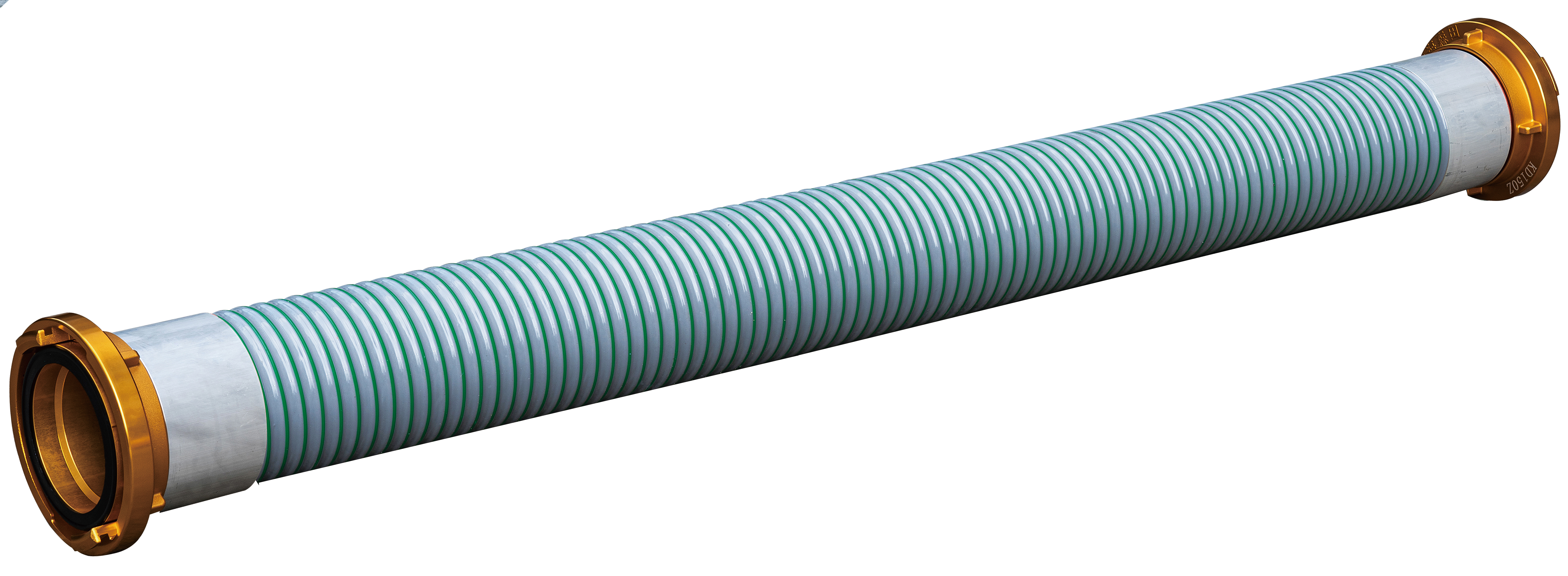
A PVC fire suction hose is highly cost-effective and widely used in budget-conscious departments. It is lightweight, which reduces the physical burden on firefighters during rapid deployments. The extrusion process creates a perfectly smooth internal bore. This smooth surface minimizes friction loss during drafting operations, allowing water to flow with minimal turbulence. The transparent or semi-transparent nature of some PVC hoses also allows pump operators to visually confirm water flow and spot air bubbles entering the system from a loose coupling.
The primary disadvantage of PVC is its temperature sensitivity. PVC can become highly rigid in freezing temperatures. Handling becomes difficult, and the hose resists bending, making alignment with the pump intake physically exhausting. PVC also suffers from lower UV resistance over time. Prolonged exposure to direct sunlight causes the plasticizers to break down. The hose becomes brittle, leading to micro-cracks that eventually compromise the vacuum seal. Indoor storage or enclosed apparatus compartments are mandatory to extend its lifespan.
A rubber fire suction hose represents the traditional, heavy-duty standard in the fire service. Manufacturers build these hoses using multiple layers of vulcanized rubber reinforced with high-tensile synthetic yarn and a steel wire helix. This construction offers exceptional durability and high abrasion resistance against concrete, asphalt, and sharp gravel. Rubber maintains its flexibility across extreme temperature ranges. It performs reliably in sub-zero winters and blistering summer heat without changing its handling characteristics.
The main drawback is the sheer weight. Rubber is the heaviest material option available. This increases physical strain on crews, requiring more personnel to deploy the same length of hose compared to PVC or TPU. It also carries a higher initial procurement cost. However, many departments accept the higher weight and cost because the operational lifespan and extreme-weather reliability of rubber far exceed other materials.
A TPU fire suction hose delivers an excellent strength-to-weight ratio, bridging the gap between heavy rubber and lightweight PVC. TPU is highly resistant to chemicals, oils, and industrial solvents, making it an excellent choice for refinery brigades or hazmat support operations. It provides significantly better cold-weather flexibility than standard PVC, resisting the stiffening effect that plagues cheaper plastics during winter responses.
The primary disadvantage of TPU is the premium pricing. The advanced polymer construction makes it one of the most expensive options per foot. Availability may also be limited depending on your specific region and local distributor networks. Departments must weigh the high upfront cost against the long-term benefits of chemical resistance and reduced crew fatigue.
To maximize the lifespan of your equipment, implement these material inspection protocols:
Check PVC hoses for milky discoloration or chalky textures indicating severe UV degradation.
Inspect rubber jackets for deep abrasions or gouges that expose the internal steel wire to moisture and rust.
Examine TPU hoses for signs of delamination near the coupling expansion rings where mechanical stress is highest.
Verify the internal bore of all hoses remains perfectly smooth, as internal blistering disrupts water flow and reduces pump efficiency.
Dry and wet weights dictate deployment speed and tactical efficiency. A 100mm section requires one or two firefighters to manage safely. A 125mm section demands two trained personnel for proper alignment and connection. A 150mm hose requires up to three people to lift, position, and thread the couplings without causing damage. We typically measure and deploy these hoses in 10-foot or 3-meter sections to maintain structural rigidity. Attempting to use longer sections of hard suction hose makes the assembly too heavy and unwieldy for rapid fireground operations.
The rigidity and bend radius of larger hoses strictly dictate your apparatus storage solutions. You must plan for side trays, rear chutes, or specialized roof mounts. A 150mm hose rarely fits in standard side compartments. You must measure your apparatus trays before upgrading hose diameters. If the hose protrudes or requires excessive force to stow, it will eventually sustain damage to the outer jacket or the internal helix. Custom brackets and secure tie-downs are essential to prevent the hose from shifting during transit.
Matching threads is vital for operational success. You might use traditional NH/NST threaded couplings or modern quarter-turn Storz connections. Regardless of the standard, you must ensure perfectly airtight seals when connecting multiple lengths. A single air leak at the coupling destroys the vacuum. You lose your draft immediately, and the pump runs dry. Firefighters must inspect the rubber gaskets inside the couplings regularly. A missing, cracked, or deformed gasket will pull air into the system, rendering the entire drafting operation useless.
Larger diameter hoses draw water at massive velocities. A 125mm or 150mm hose creates a powerful suction force at the intake point. You must use specialized strainers to manage this force. Without a proper strainer, the high-velocity intake will ingest rocks, mud, or branches. This debris will destroy a pump impeller in seconds, taking the apparatus out of service permanently.
Strainer Types and Optimal Use Cases
Strainer Type |
Design Feature |
Best Operational Environment |
|---|---|---|
Barrel Strainer |
Cylindrical design with holes on all sides |
Deep, clean water sources like lakes or deep rivers. |
Low-Level Strainer |
Flat bottom with side intakes |
Portable drop tanks; pulls water down to a few inches. |
Floating Strainer |
Buoyant collar keeps intake below surface |
Shallow ponds or creeks with muddy bottoms. |
Ensure your fire suction hose supplier provides fully compliant products. They must meet or exceed NFPA 1961, ISO, or equivalent regional standards for fire hose manufacturing. Hard suction hoses require strict manufacturing tolerances to guarantee vacuum integrity. A supplier who cuts corners on the internal helix gauge or the outer jacket extrusion will deliver a product that fails under fireground conditions. Request documentation proving their compliance with recognized industry standards.
Look for suppliers who provide documented testing data for every batch. You need proof of vacuum testing and hydrostatic testing. The hose must withstand severe negative pressure without deforming, and it must hold positive pressure if used in a relay pumping scenario. Do not accept hoses without verifiable test records. A reputable manufacturer will gladly provide the technical data sheets and testing certificates for their PVC, rubber, and TPU lines.
Evaluate the supplier's ability to provide custom lengths and specific coupling installations. You may need lightweight aluminum fittings to reduce overall weight, or you may prefer traditional brass fittings for maximum durability. Ensure the supplier can match your department's specific thread pitch. Finally, confirm they offer reliable replacement schedules and warranty support for damaged equipment. A strong supplier relationship ensures your apparatus remains fully equipped and ready for service.
The choice between 100mm, 125mm, and 150mm is dictated strictly by the maximum capacity of your pump and the realities of your staffing. Oversizing your intake hose without the manpower to handle it will delay water application and endanger the structure. You must match the equipment to the physical capabilities of your crew and the specific demands of your response district.
Execute the following steps to finalize your equipment selection:
Audit your current apparatus pump intakes to verify thread compatibility and ensure your strainers match your primary hose size.
Assess your primary static water sources to determine the required lift and select the optimal hose material for your local climate.
Consult with a certified supplier to request technical data sheets and vacuum testing records for your selected hose variants.
Establish an annual testing schedule for all hard suction lines to ensure compliance with NFPA 1962 standards.
A: Unlike soft attack lines which offer 50-foot to 100-foot layout flexibility, hard suction hoses are typically sold in 10-foot or 3-meter sections. This shorter length is necessary to maintain the rigidity of the internal helix, prevent the hose from collapsing under vacuum pressure, and allow for manageable storage on the apparatus.
A: Yes, you can connect them using threaded reducers or Storz adapters. However, this creates a severe physical bottleneck. The smaller hose diameter increases friction loss and restricts the volume of water reaching the pump, significantly limiting the pump's maximum output capacity during a major incident.
A: Rubber is vastly superior for cold weather operations. It maintains its flexibility in freezing temperatures, allowing crews to deploy, bend, and store the hose easily. Standard PVC can become dangerously rigid in the cold, making it nearly impossible to maneuver or align with the pump intake.
A: You should test hard suction hoses annually. Standards like NFPA 1962 require annual dry vacuum testing and visual inspections. This testing ensures the internal helix remains intact, the inner liner shows no signs of delamination, and the couplings maintain a perfectly airtight seal.
A: A 100mm (4-inch) or smaller diameter hose is standard for portable units. This size matches the pump's specific flow rating while maintaining the lightweight agility required for rapid, two-person deployment in rough terrain, wildland scenarios, or rural drafting operations.


