
Views: 0 Author: Site Editor Publish Time: 2026-06-29 Origin: Site
Drafting water from a static source places immense vacuum stress on equipment. A collapsed or leaking suction hose leads directly to pump cavitation, loss of prime, and operational failure. These stakes highlight severe operational risks for response teams. Procurement teams often face fragmented spec sheets and confusing thread standards. They also encounter generic compliance claims failing to translate to field reliability. You need a clear approach to navigate these hardware hurdles effectively.
We will provide a skepticism-driven, technical checklist for evaluating hard suction lines. You will learn how to verify thread compatibility, audit compliance records, and evaluate supplier reliability before issuing a purchase order. This guide strips away marketing noise to focus purely on structural integrity and deployment readiness.
Verify Thread Matching: Coupling mismatch is the #1 procurement error; explicitly confirm thread standards (e.g., NH/NST vs. NPSH) against existing pump intakes.
Check Vacuum Ratings: A true fire suction hose must withstand stringent vacuum testing (e.g., 24 inches of mercury) without internal delamination or structural collapse.
Align Material with Climate: Select between PVC, rubber, or polyurethane based on extreme temperature flexibility and deployment environments, not just unit cost.
Vet Supplier Capabilities: Prioritize vendors offering verifiable batch testing, clear lead times, and custom configurations for specific operational needs.
Buyers often struggle to compare vendor quotes accurately. You can utilize the industrial standard S.T.A.M.P.E.D. methodology to strip ambiguity from specifications. This acronym stands for Size, Temperature, Application, Material, Pressure, Ends, and Delivery. It provides a comprehensive baseline for evaluating any drafting equipment. We recommend adopting this framework to ensure your requirements remain perfectly clear.
Factor | Description | Procurement Focus |
|---|---|---|
Size | Inside Diameter (ID) and overall length. | Match ID precisely to pump GPM capacity. |
Temperature | Ambient and fluid thermal limits. | Assess cold-weather flexibility requirements. |
Application | Drafting environment and fluid type. | Identify chemical or abrasive exposure risks. |
Material | Construction compounds (PVC, Rubber). | Balance physical weight against durability. |
Pressure | Negative pressure (vacuum) tolerance. | Confirm 24 in. Hg vacuum hold capability. |
Ends | Coupling types and threading standards. | Verify exact pitch and diameter matches. |
Delivery | Logistics and manufacturing lead times. | Audit supply chain transparency. |
You must specify Inside Diameter (ID) requirements carefully. Common sizes range from 1.5 inches to 6 inches. Buyers should base this dimension strictly on the pump's GPM flow rating. A mismatched diameter restricts water flow significantly. Oversized lines increase deployment difficulty without adding operational value.
Next, define the drafting environment completely. Are you drafting from salt water, agricultural ponds, or chemical-heavy industrial sites? Environmental exposure dictates specific chemical resistance needs. A hose designed for clean municipal water may degrade rapidly in corrosive industrial runoff. You must communicate these environmental hazards to your supplier.
Teams must evaluate traditional rigid rubber against flexible PVC. Each material behaves differently across thermal extremes. PVC possesses excellent durability but stiffens significantly in sub-zero temperatures. This rigidity increases deployment time during critical winter operations. Crews struggle to maneuver frozen plastic lines into drafting positions.
Rubber offers much better cold-weather flexibility. However, rubber carries a heavier physical weight. It also requires highly specific storage protocols to prevent premature degradation. Always align material choices with your regional climate. Do not let procurement simplicity override operational reality.
Negative pressure limits represent the most vital metric. A hard hose must withstand powerful vacuum forces continuously. Do not accept a basic burst pressure rating as proof of quality. The specification sheet must explicitly state its vacuum rating. A proper unit handles drafting without internal delamination or structural collapse.
When pumps pull a vacuum, the internal helix bears the atmospheric load. Weak plastics or poorly bonded wires will crush inward. You must demand documented proof of vacuum integrity. This single metric separates true drafting equipment from generic supply lines.
Even a premium product remains absolutely useless if it fails to establish an airtight seal. The pump intake requires a flawless mechanical connection. Air leaks destroy suction power immediately. Teams lose their prime, causing immediate operational halts. Buyers must treat coupling verification as a primary objective.
Couplings cause constant headaches for procurement teams. You must understand the critical differences between various standards. Thread pitch and outer diameter determine compatibility. We outline the most common configurations below.
Standard Name | Characteristics | Common Application |
|---|---|---|
National Standard Thread (NST/NH) | Coarse threads, requires a gasket for sealing. | Municipal fire departments across North America. |
National Pipe Straight Hose (NPSH) | Finer threads, straight cut, seals via gasket. | Forestry applications and light industrial pumps. |
Storz / Cam-Lock | Threadless, quarter-turn locking mechanism. | Large diameter hoses and rapid-deployment setups. |
You must ensure the fire suction hose for pumps matches specific fleet hardware perfectly. A minor thread mismatch strips the aluminum intake. Once you damage the pump threads, you face severe repair delays. Always measure the existing intakes manually before ordering.
Use a thread gauge to confirm the threads per inch (TPI). Measure the outer diameter using calipers. Never guess these dimensions based on visual inspections. Precision guarantees a seamless connection during chaotic deployment scenarios.
Specialized equipment often requires exact OEM tolerances. Off-the-shelf fittings might cause unpredictable damage. For example, replacing a Tohatsu fire pump suction hose requires extreme care. You must verify the lightweight aluminum coupling specs meticulously. Incorrect threads easily cross-thread and destroy the intakes on portable pumps. You should always consult the original pump manual for exact tolerance requirements.
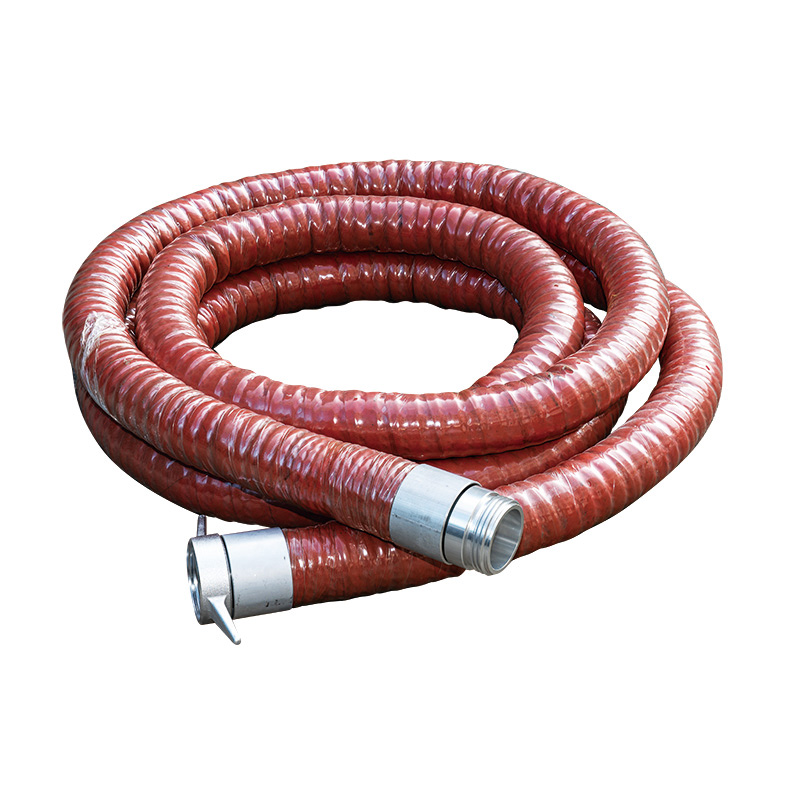
You must look past generic marketing claims. Stating a product is "NFPA compliant" means very little without hard proof. You must demand to see underlying testing methodologies. Manufacturers should test products against established standards like NFPA 1961. This document governs fire hose manufacturing specifically. It dictates performance criteria for drafting operations.
Reputable suppliers readily provide verifiable evidence. They track test results rigorously across production runs. You should request specific performance data before signing any contracts. Reliable vendors maintain organized quality assurance records.
Ensure the manufacturer supplies the following documentation:
Vacuum testing records demonstrating the hose holds 24 inches of mercury (in. Hg) for 10 minutes without physical collapse.
Adhesion testing results proving the inner liner strongly resists separation from the outer jacket.
Hydrostatic pressure data verifying the absence of pinhole leaks at the coupling integration points.
Material batch certificates tracing the origin of the polymers or rubber compounds used.
Dismiss vendors lacking recent quality assurance documentation. Batch-specific QA records separate reliable manufacturers from risky ones. If a supplier hesitates to share testing data, walk away immediately. Vague assurances about quality control indicate poor internal standards. You cannot risk equipment failure based on unverified promises.
Evaluate the long-term realities associated with premature wear. Maintenance burdens increase significantly when you select sub-optimal materials. Frequent replacements disrupt operations and drain departmental resources. True reliability requires considering the entire operational lifespan. You must anticipate how the equipment ages under harsh conditions.
Material choice heavily dictates your storage procedures. Rubber components demand strict ozone exposure avoidance. Ozone cracks rubber quickly in poorly ventilated apparatus bays. Electric motors generate ozone, destroying stored rubber over time. You must implement specific ventilation protocols.
Conversely, specific plastic blends require robust UV degradation prevention. Direct sunlight ruins PVC flexibility rapidly. The plasticizers leach out, leaving the material brittle and prone to shattering. You must adjust your storage compartments to shield equipment from continuous daylight.
Maintenance requires significant labor over the equipment lifespan. NFPA 1962 mandates annual testing to maintain operational readiness. A typical hard line lasts between five and ten years under normal conditions. Regular visual inspections must occur after every single use.
Crews must check for deep abrasions exposing the helix. They should monitor the couplings for subtle slippage. Annual service testing ensures the unit still holds a vacuum properly. If the equipment fails this annual benchmark, you must remove it from service permanently.
Evaluating the supplier matters just as much as evaluating the product. Supply chain disruptions plague procurement departments globally. You need partners who deliver reliably. Transparent communication prevents deployment delays.
Always inquire about raw material sourcing. Ask for actual manufacturing locations. These details help you anticipate accurate lead times. Aspirational shipping dates often lead to empty apparatus bays. Knowing the exact origin point reduces logistical surprises.
Vendors relying on third-party assemblers often face quality control gaps. Direct manufacturers usually offer better accountability. They control the timeline from extrusion to final coupling installation.
Distinct fleet needs require specialized solutions. You should evaluate the supplier's custom fire hose OEM service carefully. Can they provide specific lengths for tight storage compartments? Do they offer non-standard threading options for legacy pumps?
Sometimes you need color-coded protective jackets for rapid identification on chaotic scenes. The best partners accommodate these requests efficiently. They offer flexible manufacturing without demanding excessive minimum order quantities. Customization ensures the equipment matches your exact operational doctrine.
Examine warranty language closely. Look for terms explicitly covering delamination and structural collapse. The warranty must address coupling separation clearly. Reject policies covering only basic "general wear." A robust warranty proves the manufacturer trusts their own production process. It protects your department against hidden manufacturing defects surfacing months later.
Sourcing suction equipment remains an exercise in strict risk mitigation. Operational success requires matching exact pump threading perfectly. You must aggressively demand vacuum test documentation from vendors. Selecting materials suited for regional climates ensures deployment readiness. You cannot afford equipment failure during a critical drafting operation.
Take proactive steps before releasing any procurement requests. Follow this systematic approach:
Audit your current pump intakes manually using thread gauges and calipers.
Define your climate variables, noting extreme winter or summer temperatures.
Identify primary drafting environments to determine chemical resistance needs.
Request detailed spec sheets and thread-pitch confirmations from shortlisted suppliers.
Review warranty terms and QA documentation thoroughly.
By applying these steps, you secure reliable equipment capable of performing under intense pressure.
A: Hard suction contains a rigid wire or plastic helix to prevent collapse under negative pressure during drafting. Soft suction lacks this rigid structure. It is used solely for pressurized supply lines connecting a hydrant directly to the pump.
A: Measure the outer diameter of the male threads on your pump intake using calipers. Count the threads per inch (TPI) using a thread gauge. Cross-reference these two specific numbers with standard thread charts (e.g., NH/NST) before placing your order.
A: According to NFPA 1962 guidelines, they must undergo visual inspection immediately after every use. Additionally, they require formal service testing, which includes rigorous vacuum testing, annually to ensure structural integrity.
A: Generally, no. If the rigid internal helix becomes crushed or deformed, it loses structural integrity. If the inner liner delaminates, the hose cannot safely hold a vacuum. You must take it out of service immediately and replace it.


