
Views: 0 Author: Site Editor Publish Time: 2026-09-29 Origin: Site
Industrial and municipal fire suppression relies heavily on the precise mechanical mixing of water, foam concentrate, and air at the discharge point. Selecting the wrong delivery device compromises foam expansion, reduces vapor suppression, increases toxic environmental runoff, and endangers personnel by limiting safe standoff distances. Facility managers and fire protection engineers must balance the need for high-quality foam blankets against tactical requirements for reach, penetration, and environmental compliance. You cannot afford to guess when outfitting your response teams. This guide provides a technical breakdown of the mechanical differences, performance trade-offs, hydraulic requirements, and application-specific success criteria between aspirating and non-aspirating nozzles. We will cover exactly how these tools perform on the fireground, helping you make informed procurement decisions and build effective tactical plans.
Mechanical Difference: Air-aspirating nozzles actively draw air into the stream via the Venturi effect to create a thick, stable foam, whereas non-aspirating nozzles rely on ambient air mixing after discharge.
Performance Trade-off: Aspirating nozzles deliver superior vapor suppression, longer drain times, and reduced environmental runoff but sacrifice throw distance; non-aspirating nozzles provide maximum reach and rapid knockdown but produce a wetter, faster-draining foam.
Concentrate Compatibility: The industry-wide transition to Synthetic Fluorine-Free Foam (SFFF) heavily favors air-aspirating equipment, as SFFF lacks the film-forming properties of legacy AFFF and requires mechanical aeration to function effectively.
Tactical Deployment: Non-aspirating nozzles are optimal for dynamic, three-dimensional fires requiring reach, while aspirating nozzles are critical for securing un-ignited two-dimensional liquid spills and ensuring NFPA 11 compliance.
Effective fire suppression foam requires four distinct elements working in perfect balance. We call this the foam tetrahedron. You need water to provide volume and cooling capacity. You need foam concentrate to supply the chemical surfactants that lower the surface tension of the water. You need mechanical agitation to physically mix the solution. Finally, you need air to inflate the bubbles. The proportioning system at the pump panel handles the water and concentrate mixture. The delivery device at the end of the hose line dictates the final two variables. The internal geometry of the nozzle determines exactly how much air enters the solution and how violently the fluid agitates to form the finished bubble structure.
An air aspirating foam nozzle features a specialized internal architecture designed specifically for active aeration. The device includes a long, cylindrical expansion tube and engineered air intake ports located near the base of the barrel. As the pressurized foam solution passes through a restricted orifice inside the nozzle, its velocity spikes rapidly. This sudden acceleration creates a localized pressure drop, a physical phenomenon known as the Venturi effect.
This low-pressure zone acts like a vacuum, pulling ambient air through the intake ports directly into the fluid stream. The aerated mixture then travels down the length of the expansion tube. Internal baffles and screens provide intense mechanical agitation, forcing the air and fluid to mix thoroughly. This violent mixing process creates a uniform, tightly knit bubble structure before the foam ever exits the device.
These devices typically achieve expansion ratios between 6:1 and 20:1. This specific performance metric classifies the device as a low expansion foam nozzle. However, achieving these optimal ratios requires adequate hydraulic power from the pump. Aspirating nozzles demand specific minimum inlet pressures to function correctly. Operators generally need to supply 75 to 100 psi directly at the nozzle inlet. If the pump operator under-pressurizes the line, or if friction loss in the hose is too high, the nozzle fails to generate a sufficient Venturi effect. The result is poor aeration, a weak foam blanket, and wasted concentrate.
Standard combination nozzles used for everyday water application can also deliver foam solution. These devices lack air intake ports and long expansion tubes. Instead, they rely entirely on the stream's trajectory to aerate the solution passively. As the fluid exits the barrel and travels through the atmosphere, friction causes ambient air to mix into the outer layers of the stream.
This passive aeration method is highly inefficient compared to active aspiration. A non aspirating foam nozzle typically produces expansion ratios between 2:1 and 4:1. The resulting foam possesses entirely different physical characteristics. It is highly fluid, heavy, and wet. The bubbles are inconsistent in size, fragile, and break down rapidly compared to actively aerated foam. While this wet foam can extinguish fires, it lacks the structural integrity required for long-term hazard mitigation.
Mechanical Component | Aspirating Nozzle | Non-Aspirating Nozzle |
|---|---|---|
Air Intake Ports | Yes (Engineered at the base) | No |
Expansion Tube | Yes (Elongated for agitation) | No (Standard short barrel) |
Aeration Method | Active (Venturi vacuum) | Passive (Atmospheric friction) |
Internal Agitators | Yes (Screens or baffles) | No (Smooth bore or spinning teeth) |
The bubble structure directly dictates the stability and longevity of the finished foam blanket. Aspirated foam provides a thick, resilient barrier over the fuel surface. The uniform bubbles hold their shape and resist thermal degradation from the surrounding heat. This structural integrity creates slow drain times. In field testing, aspirated foam often takes 10 to 15 minutes to reach a 25% drain time. The water slowly releases from the foam matrix, providing prolonged cooling to the fuel surface. This thick blanket excels at sealing volatile vapors and preventing burnback over extended operational periods.
Non-aspirated foam behaves completely differently on the fireground. The wetter, heavier foam flows quickly across surfaces, which helps it navigate around obstacles. However, the inconsistent bubble structure drains rapidly. The water drops out of the foam matrix in just a few minutes. This rapid drainage severely reduces long-term burnback resistance. Once the water drains away, the remaining foam structure collapses, exposing the hot fuel surface to oxygen and potential re-ignition sources.
Fluid dynamics play a major role in tactical deployment and firefighter safety. Introducing large volumes of air into a fluid stream fundamentally changes its physical properties. The air reduces the overall mass and exit velocity of the stream. Consequently, an aspirating nozzle suffers a significant reduction in throw distance. Operators often see a 20% to 30% decrease in reach compared to standard water application. A line that normally reaches 100 feet might only push foam 65 to 70 feet when using an aspirating tube. Furthermore, the lighter, aerated stream is highly susceptible to wind shear and thermal updrafts, making accurate placement difficult in severe weather or massive fires.
Conversely, a standard fire hose nozzle maintains high stream velocity. The dense, non-aerated fluid cuts through the air with minimal resistance. This provides a distinct tactical advantage for the nozzle operator. Crews can attack fires from safer standoff distances, keeping them out of the immediate radiant heat zone. The high-velocity stream easily penetrates strong thermal columns generated by intense fires, delivering the solution directly to the seat of the fire.
Suppression timelines vary drastically based on the equipment you deploy. Non-aspirating nozzles offer faster initial knockdown. The high water content and physical impact force of the stream quickly cool the environment and disrupt the thermal layer. The fluid nature of the wet foam allows it to spread rapidly across the fuel surface. This makes it highly effective for immediate fire control and rescue operations where seconds matter.
Post-fire security requires a completely different approach. Aspirating nozzles are mandatory for securing hazardous material spills and preventing secondary ignitions. When dealing with un-ignited volatile liquids, rapid knockdown is irrelevant because there is no fire yet. The primary goal is vapor suppression. A thick, aspirated blanket traps flammable vapors, preventing them from finding an ignition source. This stability is critical for long-term incident management, allowing cleanup crews to work safely around the spill.
Efficiency in concentrate usage directly impacts environmental safety and incident cost. Aspirating nozzles create a higher volume of finished foam per gallon of raw solution. Because the expansion ratio is higher, operators need less total water and less chemical concentrate to achieve the required blanket depth over a given area.
Using less solution significantly reduces the volume of contaminated runoff. Firewater runoff contains toxic combustion byproducts and chemical surfactants. Containing this runoff is a major operational challenge for facility managers and municipal departments. By maximizing expansion efficiency, aspirating nozzles help mitigate environmental damage, keep toxic water out of local storm drains, and drastically reduce post-incident cleanup costs.
Certain hazard profiles demand maximum foam expansion to achieve extinguishment. Two-dimensional pool fires represent the most common application for this equipment. These include incidents at tank farms, bunded containment areas, highway tanker rollovers, and aviation hangars. The flat, static nature of these hazards requires a uniform, slow-draining blanket to completely smother the surface and cut off oxygen.
HazMat response teams rely heavily on this equipment for preventative measures. Securing un-ignited fuel spills requires a vapor-tight seal that lasts for hours. Furthermore, many fixed and semi-fixed industrial systems require strict adherence to NFPA 11 standards. These standards often mandate specific expansion ratios for low-expansion foam systems, making aspirating equipment a regulatory necessity rather than just a tactical preference.
Dynamic fire environments require tactical agility and reach. Three-dimensional fires, where fuel cascades from an elevated source like a ruptured pipe or valve, defeat thick foam blankets. The aspirated foam simply falls away from the vertical surfaces. Pressure-fed fires also require dynamic application. In these scenarios, operators need the reach, penetration, and cooling power of a non-aspirated stream to gain control.
Structural protection and municipal firefighting often require rapid transitions between water-only cooling and foam application. Municipal response vehicles have limited compartment space, which favors a single, multi-purpose tool. A standard combination nozzle allows firefighters to apply cooling water to a burning vehicle, then instantly switch to applying wet foam to the leaking fuel tank without shutting down the line to change hardware.
Nozzle choice dictates the physical tactics used on the fireground. Aspirated foam requires gentle application techniques to maintain the integrity of the bubbles. Operators must use specific methods to avoid plunging the stream directly into the liquid, which agitates the fuel and destroys the foam blanket.
The Bank-Down Method: The operator identifies a vertical surface behind or adjacent to the spill. They direct the foam stream at this surface, allowing the thick foam to cascade down and gently flow over the burning liquid.
The Roll-On Method: The operator directs the stream at the ground just in front of the spill. They use the velocity of the stream to push the growing foam blanket forward across the fuel surface.
The Rain-Down Method: Used primarily with non-aspirated foam. The operator directs the stream high into the air, allowing the wet foam to fall gently onto the hazard like rain, leveraging the nozzle's throw distance while minimizing fuel agitation.
The global transition away from PFAS-containing chemicals has fundamentally changed foam operations. Utilizing legacy non-aspirating equipment with modern Synthetic Fluorine-Free Foam (SFFF) concentrates introduces critical operational risks. Legacy Aqueous Film-Forming Foam (AFFF) contained fluorosurfactants that created a chemical film. This film floated on the fuel and sealed vapors even if the physical bubble structure degraded. This unique property allowed AFFF to work reasonably well with non-aspirating nozzles.
SFFF does not contain fluorosurfactants and does not form an aqueous film. SFFF relies entirely on the physical bubble blanket to seal vapors and extinguish the fire. Without mechanical aeration to build a robust bubble matrix, SFFF cannot form a stable blanket. The foam will sink or burn off rapidly. Therefore, an air aspirating nozzle is practically mandatory for reliable extinguishment when using modern fluorine-free concentrates.
Aeration capabilities mean nothing if the system hydraulics are mismatched. The flow rate of the delivery device must perfectly match the proportioning system. If an operator uses a 95 GPM inline eductor, they must use a 95 GPM foam fire nozzle at the end of the line. You cannot mix and match flow rates and expect the system to work.
Mismatches lead to severe proportioning failures. If the nozzle flows less water than the eductor is rated for (e.g., a 60 GPM nozzle on a 95 GPM eductor), backpressure builds up in the hose. This backpressure prevents the eductor from creating its own Venturi vacuum, resulting in zero concentrate pickup. You will flow plain water onto the fire. If the nozzle flows more water than the eductor is rated for, the system produces a lean, weak solution. Hydraulic matching is a non-negotiable requirement for all foam operations.
Physical bulk impacts tactical deployment speed. Aspirating tubes are inherently longer and wider than standard combination nozzles. They are heavier and harder to maneuver, especially in confined spaces, stairwells, or complex industrial environments with tight pipe racks. This bulk can slow down initial attack lines and fatigue operators faster.
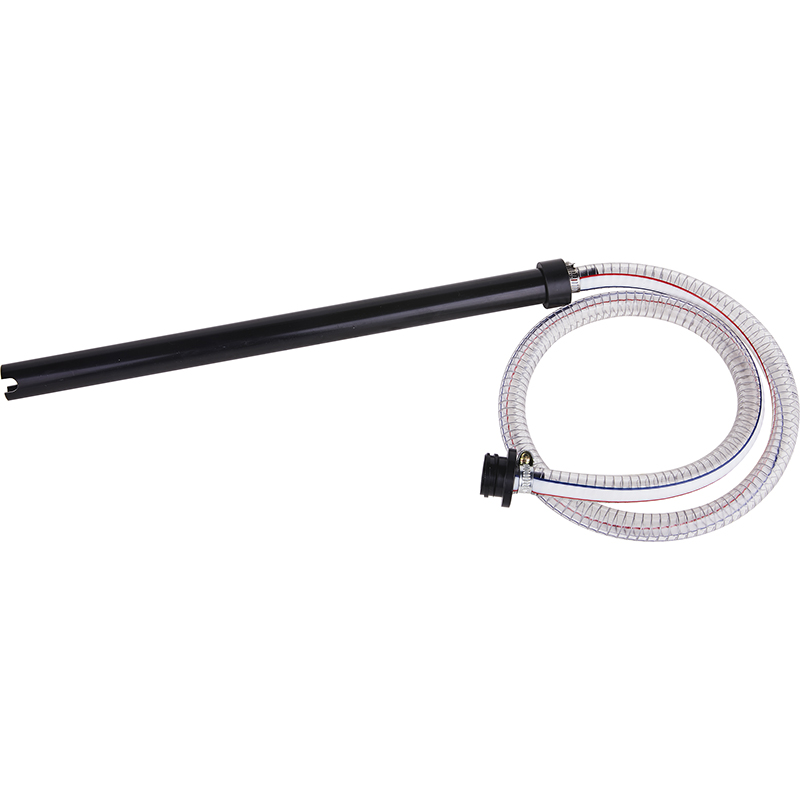
Many departments utilize a specific mitigation strategy to maintain agility while meeting aeration requirements. They deploy clip-on or attachable aspirating tubes. These accessories clamp directly onto the bumper of a standard combination nozzle. This converts a standard water nozzle into an aspirating device in seconds. It offers tactical flexibility, allowing operators to stretch a standard line quickly, then attach the tube only when they reach the hazard and are ready to flow foam.
Maintaining firefighting foam equipment requires strict protocols. Aspirating nozzles feature delicate internal components. The air intake ports and internal agitation screens can easily become clogged. Debris from the water source, rust from old pipes, or dried foam concentrate will block the Venturi mechanism. If the ports clog, the nozzle cannot draw air, and it fails to aspirate.
Operators must thoroughly flush aspirating equipment with clean water after every single use. Foam concentrate is highly corrosive and sticky. If left inside the nozzle, it dries into a hard resin that ruins the equipment. Non-aspirating nozzles have simpler internal waterways and are generally more rugged. However, they still require regular flushing to prevent the internal ball valves and spinning teeth from sticking due to dried concentrate residue.
Procuring life-safety equipment requires rigorous vetting. Facility managers must ensure all equipment holds active UL listings and FM approvals. The hardware must align with NFPA 1964 standards for spray nozzles. However, individual component certification is no longer enough in the modern fire protection landscape.
The industry requires system-level testing. The nozzle must be tested and listed in combination with the specific foam concentrate and proportioner being used. A nozzle that performs perfectly with one brand of SFFF may fail completely with another due to different viscosity levels and chemical makeups. Procurement documents must demand combined system approval data from the manufacturer.
Evaluating a foam nozzle supplier goes beyond the initial purchase price. The supplier must provide comprehensive technical support. This includes providing flow testing data, trajectory charts, and maintenance training for your specific hazard profiles.
As facilities transition to SFFF, supplier support becomes critical. The supplier should offer transition guidance to ensure legacy hardware operates correctly with new chemistries. Procurement teams should also verify the availability of replacement parts, attachable aeration tubes, and flow-rate variations to ensure long-term operational scalability as facility hazards evolve.
Procurement Criteria | Requirement Details |
|---|---|
System-Level Approvals | Must be UL/FM listed with the exact concentrate and proportioner used on site. |
Hydraulic Matching | Supplier must offer exact GPM matches for existing inline eductors. |
SFFF Compatibility | Must provide documented expansion ratios specifically for fluorine-free concentrates. |
Accessory Availability | Should offer clip-on tubes for tactical flexibility on standard handlines. |
Conduct a site-specific hazard analysis to determine if your facility faces primarily two-dimensional static spills or dynamic three-dimensional pressure fires.
Review your current foam concentrate specifications, especially if you are transitioning away from PFAS, to confirm strict mechanical aeration requirements.
Audit your existing proportioning systems and inline eductors to ensure the GPM ratings perfectly match your intended delivery devices.
Schedule physical flow testing with your shortlisted equipment to verify throw distance and blanket stability under real-world conditions.
A: Yes, a standard combination nozzle acts as a non-aspirating nozzle. It will produce a low-expansion, wet foam suitable for rapid knockdown and AFFF concentrates. However, it will not provide the thick blanket required for long-term vapor suppression or SFFF concentrates.
A: An air aspirating low expansion foam nozzle typically produces an expansion ratio between 6:1 and 20:1. The exact ratio depends heavily on the operating pressure at the inlet, the specific concentrate chemistry, and the internal design of the aeration tube.
A: In most cases, yes. Because SFFF does not form a vapor-sealing aqueous film like legacy AFFF, it relies entirely on a thick, mechanically agitated bubble structure to extinguish fires. This requires the active aeration provided by an aspirating nozzle.
A: The process of drawing air into the stream via the Venturi effect introduces gas into the fluid. This reduces the overall density and exit velocity of the stream, making it lighter and much more susceptible to wind and thermal updrafts.
A: Yes. Air-aspirating nozzles require a specific minimum inlet pressure, usually around 75 to 100 psi. This pressure is necessary to create a strong enough Venturi effect to pull in adequate air. Low pressure results in poor aeration and a weak foam blanket.
A: It is a physical accessory that clamps onto the bumper of a standard non-aspirating fire hose nozzle. It allows firefighters to instantly convert their standard water nozzle into an air-aspirating device for situations requiring a thicker, more stable foam blanket.
A: Look for suppliers that provide UL and FM listed equipment. They must offer comprehensive compatibility data for modern foam concentrates and supply detailed flow-rate and trajectory charts for all their firefighting foam equipment to ensure system-level compliance.


