
Views: 0 Author: Site Editor Publish Time: 2026-05-28 Origin: Site
In high-stakes fluid control, equipment failure is simply not an option. A split-flow valve serves as a critical junction in these intense environments. Procurement teams and field engineers face a constant dilemma when selecting equipment. Do you choose the lightweight appeal of aluminum, or do you trust the heavy-duty reliability of brass? Making the wrong choice can lead to catastrophic blowouts, seized threads, or severe galvanic corrosion.
When battling municipal blazes or managing industrial fluid transfers, a dependable Fire Water Divider keeps operations running smoothly. These heavy-duty valves must endure massive hydraulic forces and rough handling. Our comprehensive guide moves beyond basic pros and cons. We evaluate both metals through a strict engineering lens. You will learn how mechanical stress, galvanic corrosion, and thermal dynamics dictate valve longevity.
By the end of this analysis, you will understand the physical limits of each material. We will help you spec the exact valve needed for your unique operational environment. You can confidently match the perfect alloy to your toughest fluid routing challenges.
Best for Static High-Pressure & Longevity: Brass outlasts aluminum in surge pressure resistance (often handling 500+ psi surges) and avoids thread galling over repeated actuations.
Best for Rapid Deployment & Mobility: Aluminum offers a 60–70% weight reduction (approx. 2.70 g/cm³ vs brass's 8.5 g/cm³), ideal for highly mobile operations but requires strict coating maintenance.
Environmental Caveats: Aluminum is highly vulnerable to alkaline breakdown and galvanic corrosion if mated with dissimilar metals, while brass requires monitoring for dezincification in highly chlorinated water.
Cost Reality: Aluminum wins on initial unit cost; brass dominates lifecycle value due to its minimal maintenance requirements.
Fluid routing valves operate in punishing environments. Moisture, salt, and chemicals constantly attack their surfaces. Understanding how aluminum and brass react to these threats is essential for system longevity.
Dissimilar metal corrosion destroys fluid systems rapidly. This happens when two different metals touch while submerged in an electrolyte. Saltwater and hard water act as highly efficient electrolytes. Aluminum valves suffer severely in these conditions. When you connect an aluminum valve to brass, steel, or copper fittings, a fast galvanic reaction occurs. The aluminum acts as an anode and sacrifices itself. It corrodes away quickly, weakening the valve body.
Brass behaves entirely differently. It acts as a stable neutral in mixed-metal fluid systems. You can connect it to various metals without triggering aggressive galvanic decay. This makes it highly versatile for permanent industrial installations.
Aluminum relies heavily on external protection. Manufacturers usually apply powder coating or hard anodization. These layers shield the vulnerable metal underneath. However, field use inevitably causes scratches. Dragging equipment across pavement or gravel exposes raw aluminum. Once exposed, it oxidizes rapidly. Alkaline environments or saline moisture accelerate this breakdown, causing deep pitting.
Brass protects itself naturally. As it ages, it forms a protective patina. This dark, oxidized layer prevents deeper corrosion. Even if you scratch the surface, the underlying material remains structurally sound. It requires no secondary coatings to survive harsh conditions.
No metal is entirely flawless. Brass has a specific vulnerability known as dezincification. This occurs in highly chlorinated environments or low-pH water. The zinc leaches out of the alloy, leaving behind a weak, porous copper shell. The valve might look fine externally but will fail under pressure.
To prevent this, engineers must specify dezincification-resistant (DZR) brass. DZR brass contains precise chemical additives. These additives lock the zinc into the alloy structure. Always verify your water chemistry before selecting standard brass.
Best Practice: Always use dielectric unions or heavy thread tape when temporarily connecting aluminum to dissimilar metals.
Common Mistake: Relying on standard aluminum valves in coastal environments. Salt spray will bypass compromised powder coats in a matter of weeks.
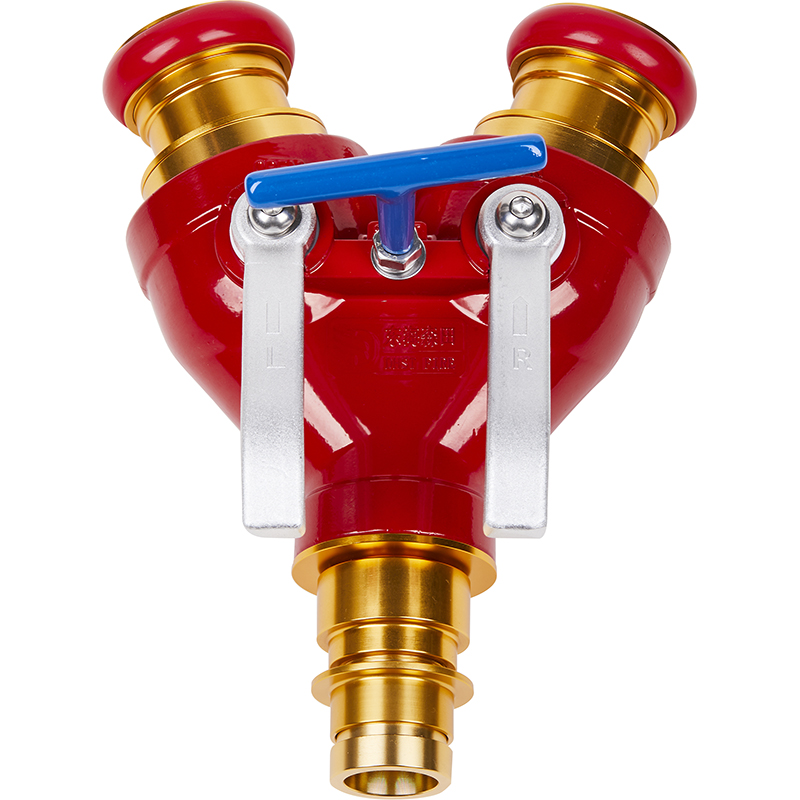
Industrial fluid lines endure violent physical forces. High torque, sudden pressure spikes, and mechanical vibration test the limits of any Gated WYE. Metal hardness and tensile strength determine whether a valve holds firm or catastrophically fails.
Emergency responders and maintenance crews rapidly couple and uncouple hoses. This fast action creates immense friction on the threads. Aluminum threads are significantly softer. Under high torque, they frequently suffer from "galling." This phenomenon occurs when friction causes the soft metal to cold-weld together. Once galled, the threads strip entirely upon removal, ruining the equipment.
Brass maintains superior lubricity. The natural properties of the alloy reduce friction during connection. It possesses much higher surface hardness. You can aggressively thread and unthread brass connections repeatedly. They will not seize or cold-weld, ensuring reliable deployment under high-stress emergency conditions.
Fluid systems rarely maintain perfectly static pressure. Valves must absorb sudden hydraulic shocks, commonly known as water hammer. Aerospace-grade aluminum, such as 7075-T6, boasts impressive tensile strength. However, it lacks elasticity. Sudden pressure surges can permanently deform lighter aluminum alloys.
Brass offers exceptional rigidity and dynamic elasticity. It safely absorbs massive energy spikes. Quality brass valves routinely handle surge pressures exceeding 500 psi. They expand slightly and return to their original shape without structural fatigue.
Heavy materials pose unique challenges in high-vibration systems. A dense brass valve adds significant weight to the line. If mounted to thin-walled piping or delicate sensors, this sheer mass creates a powerful bending moment. Constant vibration acts like a lever, eventually snapping the lighter connected components.
Aluminum holds a distinct advantage here. Its low mass minimizes bending moments. It is the safer choice for systems mounted in aircraft, highly mobile pump trucks, or fragile sensor arrays.
Mechanical Property | Aluminum (Hard Anodized) | Brass (Standard & DZR) |
|---|---|---|
Density (Weight) | ~2.70 g/cm³ (Extremely lightweight) | ~8.5 g/cm³ (Heavy and stable) |
Thread Galling Risk | High (Prone to cold welding under torque) | Low (Natural lubricity prevents binding) |
Surge Pressure Handling | Moderate (Susceptible to deformation) | Superior (Safely absorbs 500+ psi shocks) |
Vibration Bending Moment | Low risk to attached sensors/pipes | High risk to delicate attached piping |
Temperature fluctuations directly impact fluid control. Metals expand when heated and contract when cooled. Managing this thermal movement is crucial for maintaining tight internal seals.
Aluminum features exceptionally high thermal conductivity. It transfers heat rapidly across its entire body. This sounds beneficial for heat sinks, but it causes problems for fluid valves. Rapid temperature shifts force the metal to expand and contract dramatically.
Imagine freezing outdoor temperatures suddenly interrupted by a rush of hot industrial fluid. The aluminum housing expands almost instantly. This thermal cycling loosens mechanical joints. It pulls the metal away from internal O-ring seals, creating microscopic leak paths.
Brass serves as a thermally stable alternative. It possesses much lower thermal conductivity. Extreme environmental temperature shifts do not cause massive structural movement. The alloy heats up slowly and evenly.
This stability maintains internal ball valve and gasket tolerances over a much wider temperature gradient. Your seals remain firmly compressed. You avoid the sudden weeping or fluid bypass often seen in aluminum valves during seasonal changes.
Rapid Delta-T Shift: Fluid temperature drastically differs from the ambient valve body temperature.
Uneven Expansion: The metal housing expands faster than the internal rubber or Teflon seals.
Seal Bypass: The dimensional shift creates a temporary gap, allowing high-pressure fluid to blow past the O-ring.
Best Practice: Use brass in regions with extreme day-to-night temperature swings to protect internal seal integrity.
Common Mistake: Ignoring the thermal expansion coefficient when hard-mounting aluminum valves to rigid steel bulkheads.
Material science means nothing if the end product fails industry standards. Purchasing commercial fluid control equipment requires strict attention to compliance and manufacturing origins.
Regional compliance dictates your equipment choices. Municipal firefighting departments strictly require NFPA-compliant thread standards. Industrial sectors rely on API certifications. Ensure the valve holds UL or FM approvals depending on the specific application.
These certifications guarantee the metal alloy was tested under extreme conditions. They verify the wall thickness can handle rated burst pressures. A non-certified valve introduces unacceptable liability into your operational framework.
Working directly with an established water divider manufacturer lowers procurement risk. Direct sourcing ensures strict alloy quality control. Cheap, generic imports often suffer from porous castings. Air bubbles trapped inside the metal during casting drastically lower burst strength.
A reputable manufacturer uses advanced CNC machining or high-density forging. They provide metallurgical test reports. You gain confidence knowing the chemical composition matches your exact operational needs.
Standard off-the-shelf valves rarely fit complex industrial setups perfectly. You often need a Customizable Gated WYE. Reputable OEMs provide crucial modifications tailored to your profile.
They can modify thread types to seamlessly integrate with NST, NPSH, or BSP systems. They handle specific color-coding requirements for safety identification. Most importantly, they spec the exact alloy grade required. Whether you need DZR brass for aggressive water or hard-anodized aluminum for weight reduction, an OEM delivers a precision-engineered solution.
Choosing between brass and aluminum requires a careful evaluation of your specific operational reality. We do not declare a universal winner because each metal serves a distinct engineering purpose.
We recommend aluminum exclusively for applications where rapid, manual deployment over long distances makes weight the ultimate constraint. Forestry crews carrying gear miles into the wilderness benefit immensely from its light footprint. However, you must implement strict maintenance protocols to protect its surface coatings.
We recommend brass as the default standard for municipal fire defense and permanent industrial installations. It thrives in any scenario where high surge pressure, repeated threading, and zero-maintenance longevity are the primary success criteria. Its natural corrosion resistance and immense mechanical strength provide unmatched peace of mind.
Action Steps:
Assess your system's exposure to galvanic threats and harsh electrolytes.
Evaluate your team's physical handling limits and mobility requirements.
Review required thread standards and safety certifications for your region.
Consult an OEM to spec the correct alloy grade for your fluid chemistry.
A: Yes, but it is risky in permanent wet setups. The connection causes dissimilar metal corrosion, rapidly degrading the aluminum. If you must connect them, use dielectric isolation unions or heavy thread tape to separate the metals electrically. Keep the joint as dry as possible.
A: Aluminum is a much softer metal with poor natural lubricity. When threads engage under high torque, the friction causes "galling" or cold welding. The soft threads deform, lock together, and strip away. Brass is harder and naturally slippery, preventing this damage.
A: Commercial valves should carry UL (Underwriters Laboratories) and FM (Factory Mutual) approvals. If used in firefighting, they must meet NFPA standards and feature compliant thread cuts like NST or NPSH. Industrial petrochemical applications may require API certifications.


