
Views: 0 Author: Site Editor Publish Time: 2026-06-18 Origin: Site
Selecting the right suppression equipment is a life-or-death decision for any department. Equipment failure or improper specification directly compromises firefighter safety and suppression efficacy. We must move past basic definitions when evaluating these critical tools. Instead, departments should frame the discussion around objective operational evaluation. How do you accurately measure a tool's safety profile against standard operating guidelines (SOGs)? The answer requires looking beyond marketing brochures. True safety results from a combination of predictable flow performance, ergonomic risk reduction, and strict adherence to manufacturing standards like NFPA. You will learn how to assess structural integrity, compare complex flow control mechanisms, and evaluate reaction force physics. We will also explore how specific hazard environments demand highly customized hardware configurations. By the end of this guide, you will understand how to align hardware choices with your tactical protocols. This alignment ensures you protect crews effectively on every single emergency response.
Predictability is Safety: Selectable and automatic nozzles offer different operational advantages; choice must align with the department's pump operation protocols.
Ergonomic Design Reduces Fatigue: Minimized nozzle reaction force and intuitive bale handles directly impact long-duration suppression safety.
Compliance is Non-Negotiable: Safe fire nozzles must meet or exceed baseline structural and performance metrics, specifically NFPA 1964.
Context Dictates Specification: Industrial applications demand specialized configurations compared to municipal structural firefighting.
The materials forming your equipment dictate how it survives brutal operational environments. A reliable Fire Nozzle must withstand extreme heat, physical impacts, and constant moisture. Manufacturers typically use hard-anodized aluminum, brass, or stainless steel. Hard-anodized aluminum offers incredible strength while remaining exceptionally light. This weight reduction directly translates to reduced operator fatigue during extended operations. Brass and stainless steel provide unmatched corrosion resistance. They excel in harsh marine environments or aggressive industrial settings. You must balance the physical weight burden placed on the operator against the specific environmental corrosion risks your department faces.
Safety claims mean nothing without objective verification. NFPA 1964 acts as the ultimate trust proxy for spray nozzles. Verifying this certification removes dangerous assumptions from the procurement process. The standard requires rigorous third-party testing. Hydrostatic pressure tests push the structural casing far beyond normal operating limits to verify burst resistance. Impact resistance testing ensures the unit remains fully functional after severe drops onto solid concrete. When equipment passes these independent evaluations, operators can trust it will survive a collapsing structure or an accidental fall from an apparatus.
The front end of the device takes the most physical abuse. Evaluate the construction of the bumper and the pattern-generating teeth. Spinning teeth excel at creating a dense, wide fog pattern. However, they carry a distinct safety risk. Small rocks or rust scale from older hydrants can easily jam moving teeth, ruining the stream shape. Fixed teeth resist debris jamming much more effectively, ensuring stream consistency. Additionally, assess the outer protective bumper. Heavy-duty rubber bumpers do more than protect the metal from drops. They provide vital thermal insulation. If the metal heats up in a flashover scenario, the rubber bumper gives the operator a safe handling point.
Fixed gallonage systems offer raw simplicity. The primary safety benefit is predictable, low reaction force. Operators know exactly how the stream will behave because the water simply passes through a tapered restriction. This design delivers reliable stream penetration through intense thermal columns. It also features minimal moving parts, virtually eliminating mechanical failure risks. The main operational risk is a complete lack of pattern flexibility. Operators cannot widen the stream into a fog pattern to absorb rapid heat buildup during a sudden flashover.
Selectable designs give control back to the operator at the end of the hose line. The major safety benefit is adaptability. Operators can dial the gallons per minute (GPM) up or down based on immediate fire conditions. If the fire grows, they increase the flow. The risk here stems from human error. Under intense stress, an operator might select the wrong GPM setting. This mistake creates mismatched pump discharge pressures, leading to either a dangerously weak stream or excessive reaction force that knocks the operator off balance.
Automatic mechanisms adjust their internal baffle dynamically based on incoming pressure. The safety benefit is visual consistency. The mechanism maintains a consistent stream reach and shape even if pump pressure fluctuates wildly. The operator always sees a strong, tight stream. However, this visual consistency creates a hidden danger. Automatic devices can mask inadequate water supply. The stream might look powerful, but it may actually lack the sufficient GPM required to absorb the heat of the fire. Crews might advance into a burning room believing they have enough water, only to be overwhelmed by heat.
You must match your flow control mechanism to your crew's specific training levels and standard hose deployment strategies. We compiled a summary chart to help evaluate these mechanisms.
Mechanism Type | Primary Safety Benefit | Primary Operational Risk | Best Suited For |
|---|---|---|---|
Fixed (Smooth Bore) | Low reaction force, deep penetration | No fog pattern for rapid heat absorption | High-penetration structural attacks |
Selectable | Operator-controlled flow adjustments | Human error causing mismatched pump pressure | Highly trained, adaptable crews |
Automatic | Maintains stream shape during pressure drops | Masks dangerously low GPM flows | Complex layouts with variable pressures |
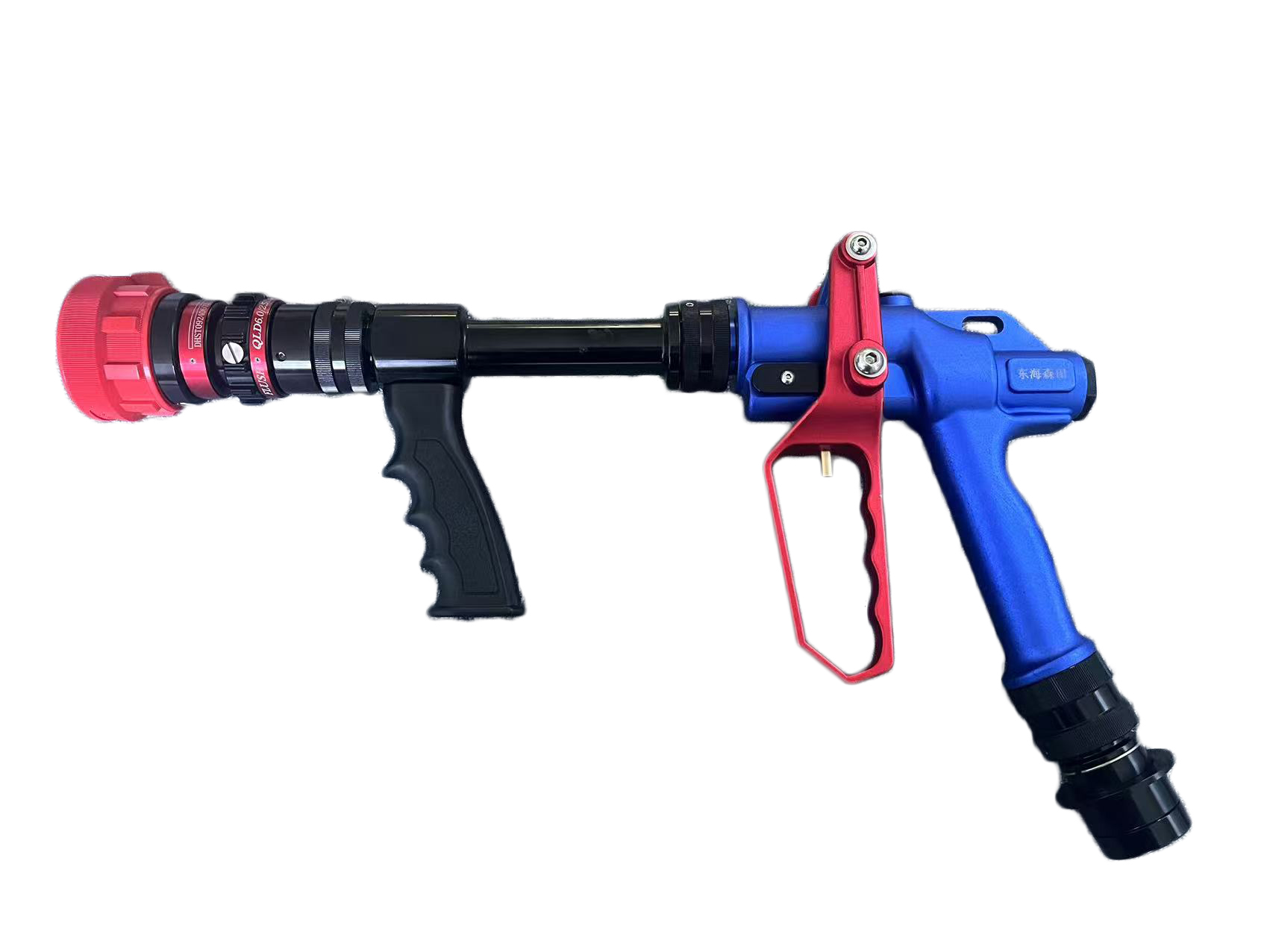
Pushing hundreds of gallons of water per minute creates severe backward thrust. This is known as nozzle reaction force. When an operator opens the bail, physics pushes them aggressively in the opposite direction. Excessive force quickly drains physical stamina. This physical exhaustion leads directly to slips, trips, and falls on the fireground. Furthermore, wrestling with high reaction forces over a long career leads to chronic musculoskeletal injuries in the shoulders and lower back. Managing this force is a primary safety mandate.
The industry has shifted significantly toward low-pressure designs to combat operator fatigue. Standard models historically operated at 100 psi. Today, 75 psi and 50 psi models dominate modern specifications. Dropping the operating pressure significantly reduces the backward thrust while maintaining the necessary GPM flow for suppression. However, you must accept an operational compromise. Lower pressure makes the hose line softer and more pliable. A softer hose is highly susceptible to kinking as it drags around corners, which can suddenly cut off the water supply.
Operating Pressure | Reaction Force Impact | Hose Rigidity & Kink Risk |
|---|---|---|
100 psi | Highest operator fatigue | Very rigid, minimal kink risk |
75 psi | Balanced physical strain | Moderate rigidity, manageable kink risk |
50 psi | Lowest operator fatigue | Soft hose, high kink risk around corners |
Reaction force management also relies heavily on physical hardware design. You must evaluate pistol grips and shutoff valves (bales) critically. Integrating an ergonomically designed Fire Nozzle minimizes physical strain by aligning the operator's wrist and forearm naturally. Pistol grips give operators a solid anchor point to lean into the thrust. You must also test the bale handles. Are they easily operable when wearing thick, heavy structural firefighting gloves? A bale that requires fine motor skills will trap operators if they cannot shut down the water flow quickly during an emergency.
Water application methods carry profound safety implications. A straight stream minimizes air entrainment. It punches through heat without disturbing the thermal layers inside a burning room. Conversely, a fog pattern pushes massive amounts of air. If used incorrectly, this air movement can push fire and superheated steam directly onto trapped victims or other crews. However, when used correctly in properly ventilated spaces, fog patterns provide rapid area cooling and absorb heat faster than any other method.
Industrial applications demand totally different tactical approaches compared to municipal structural fires. Manufacturing environments often house highly sensitive automation equipment. For example, in facilities operating complex automated packaging machinery, maintenance teams require localized bag machine configuration support and equipment protection protocols. Firing a high-pressure solid stream into these areas can cause catastrophic secondary damage to expensive machinery. Worse, high-pressure streams can agitate settled combustible dust, triggering secondary explosions. Fog-capable, low-flow configurations provide much safer, controlled mitigation in these delicate environments.
Electrical fires present severe electrocution risks for operators holding the hose line. You must evaluate specific fog patterns required to maintain dielectric safety margins. Solid water streams conduct electricity straight back to the operator. A properly engineered fog pattern breaks the water into discrete, separate droplets. This physical separation prevents electrical current from traveling back up the stream. Operating in these environments requires strict adherence to minimum distance guidelines and verified wide-pattern deployments.
A perfectly specified device becomes incredibly dangerous without rigorous, ongoing maintenance. Field serviceability dictates operational safety. You must determine if the flush mechanism can clear heavy debris without shutting down the hose line. If a pebble jams the internal baffle, operators need a quick-flush setting to pass the debris and resume flow instantly. Shutting down the water supply to clear a jam while inside a burning structure is an unacceptable risk.
Examine the internal architecture of the equipment. Are internal gaskets, O-rings, and slide valves easily replaceable at the department level? Equipment breaks down. If repairs require sending the unit back to a distant factory, departments lose critical front-line tools for weeks. Easy field serviceability ensures equipment stays in rotation. It also encourages crews to actually report minor leaks, knowing the repair process is simple and fast.
Never underestimate the friction of changing equipment. We strongly warn against changing mechanism types without comprehensive live-fire retraining. Moving from a fixed smooth bore to an automatic model drastically changes how the hose behaves hydraulically. Operators develop muscle memory based on their legacy equipment. If you hand them a new system with different reaction forces and different flow characteristics, they will make mistakes under pressure. You must build confidence through repetitive, live-fire training evolutions before putting new hardware on front-line apparatus.
How do you transition from evaluating technical features to making a final procurement decision? Follow a strict, objective shortlisting logic.
Audit Current SOGs: Start by looking inward. Review your department's target pump pressures and tactical objectives. Do your current tools match your modern operating procedures, or are you using outdated hardware simply out of habit?
Request Flow Testing: Never rely solely on manufacturer spec sheets or marketing brochures. You must conduct in-house flow tests. Hook the demonstration units to your specific apparatus. Use calibrated inline flow meters to verify the actual GPM delivered at the tip. Measure the true reaction force your crews will experience.
Vendor Evaluation: Assess the manufacturer's operational support framework. Evaluate their warranties carefully. Confirm they offer comprehensive, hands-on training support for your crews. Verify that replacement parts are readily available and ship quickly to prevent extended equipment downtime.
Safety is not a single feature; it is a comprehensive operational philosophy. Ensuring your crews return home requires aligning your hardware specifications with realistic tactical environments.
Bridging the gap between hydraulic physics and human physical limitations remains the core function of a safe specification.
Predictable flow dynamics protect operators from sudden, dangerous pressure spikes or inadequate water supply.
Ergonomic alignment drastically reduces chronic injuries and slip-and-fall hazards on the fireground.
Strict adherence to NFPA standards and rigorous flow testing prevents catastrophic field failures.
Regular maintenance and field serviceability ensure continuous operational readiness over the equipment's lifespan.
We prompt you to audit your current inventory immediately. Compare your existing hardware against your modern SOGs. If you spot inconsistencies, consult with specialized fire equipment distributors to conduct a localized risk assessment and flow testing program.
A: NFPA 1964 is the definitive safety standard. It establishes rigorous minimum performance requirements for flow rates, hydrostatic pressure limits, and operational extremes. Equipment must pass severe third-party evaluations, including drop tests and extreme temperature cycling, ensuring the device will not fail structurally during critical suppression operations.
A: Operating pressure directly correlates to reaction force. Higher pressure (e.g., 100 psi) generates massive backward thrust, forcing the operator to fight the hose line. This physical strain causes rapid fatigue, increasing the risk of slips, falls, and chronic musculoskeletal injuries. Lower pressures (50-75 psi) significantly reduce this fatigue.
A: No. Municipal and industrial hazards differ drastically. Industrial facilities often contain sensitive automation, chemical risks, or combustible dust. Firing high-pressure municipal streams into these areas can cause secondary explosions or catastrophic equipment damage. Industrial applications require highly specialized flow rates and specialized fog patterns for controlled hazard mitigation.
A: You should inspect equipment daily or after every single use to check for debris, damaged teeth, or gasket leaks. Furthermore, NFPA 1962 mandates formal, comprehensive flow testing and structural evaluation at least once annually to ensure ongoing operational safety and verified GPM accuracy.


