
Views: 0 Author: Site Editor Publish Time: 2026-11-27 Origin: Site
Thermal energy is absorbed by water volume. This fundamental reality governs all fire suppression efforts. Delivering accurate Gallons Per Minute (GPM) remains the single most critical function of a fire hose nozzle. Selecting equipment without aligning it to department pump capacities creates severe operational risks. Mismatched hose diameters and target fire loads result in dangerous nozzle reaction forces. Inadequate cooling and excessive friction loss compromise fireground operations. You cannot fight modern synthetic fire loads with inadequate water delivery.
This article provides a technical framework for evaluating nozzle flow rates. We break down the physics of pressure versus volume. You will learn how to match specific GPM outputs to tactical applications. We also cover standardizing procurement criteria. Upgrading your equipment ensures operational safety and maximizes suppression efficiency. Master the mechanics of flow control to protect your crews and improve knockdown times.
GPM Dictates Suppression, PSI Dictates Reach: Clarify that while pressure (PSI) creates the stream's reach and penetration, it is the volume of water (GPM) that extinguishes the fire.
Nozzle Reaction is the Limiting Factor: Note that higher flow rates exponentially increase nozzle reaction; handheld lines must balance maximum GPM with the physical limitations of the nozzle operator.
System Compatibility is Non-Negotiable: Emphasize that a nozzle's rated GPM is only achievable if the pump operator, hose diameter, and friction loss calculations are perfectly aligned.
Selectability vs. Simplicity: Outline the core procurement trade-off between the flexibility of adjustable flow nozzles and the foolproof reliability of fixed-gallonage and smooth bore options.
Baseline physics govern all fire streams. Pump discharge pressure dictates the initial energy entering the hose. Friction loss reduces this energy over distance as water rubs against the internal jacket of the hose. The remaining force creates nozzle pressure. Understanding this direct correlation defines your success criteria on the fireground. You cannot achieve rated GPM without adequate pressure. Conversely, excessive pressure creates unmanageable physical strain on the nozzle operator.
Pump operators must calculate the exact Pump Discharge Pressure (PDP) to ensure the nozzle receives the correct operating pressure. The formula is straightforward: PDP equals Nozzle Pressure plus Friction Loss plus Elevation Loss. If you fail to account for the friction loss in a 200-foot stretch of 1.75-inch hose, the nozzle will underperform. A nozzle designed to flow 150 GPM at 75 PSI will only flow 110 GPM if the pump operator only supplies 50 PSI to the tip. This deficit allows the fire to outpace your suppression efforts.
Nozzle reaction forces dictate field reality. High flow rates push back against the operator with significant kinetic energy. The standard formula for nozzle reaction is NR = 0.0505 × Q × √P for solid streams, where Q represents flow in GPM and P represents nozzle pressure in PSI. Fog nozzles use a slightly different coefficient, but the physical reality remains the same. A 160 GPM flow at 100 PSI generates roughly 80 lbs of reaction force. Dropping that nozzle pressure to 50 PSI while maintaining 160 GPM yields roughly 57 lbs of reaction force.
Operators fatigue rapidly when fighting forces above 65 lbs. Managing this physical pushback requires calculated equipment selection. A single firefighter can typically manage 60 lbs of reaction force for a sustained period. Pushing past 75 lbs requires a backup firefighter to absorb the backward thrust. If your department runs with limited staffing, you must select flow rates and operating pressures that a single firefighter can safely advance down a hallway.
Flow Rate (GPM) | Nozzle Pressure (PSI) | Approx. Reaction Force (lbs) | Staffing Requirement |
|---|---|---|---|
150 | 100 | 76 | 2 Firefighters |
150 | 50 | 54 | 1 Firefighter |
185 | 75 | 81 | 2 Firefighters |
200 | 50 | 71 | 2 Firefighters |
The fire service is shifting toward low-pressure nozzles. Operating at 75 PSI or 50 PSI significantly reduces operator fatigue. Lower pressure means lower nozzle reaction. However, this creates an objective trade-off in stream performance. Traditional 100 PSI nozzles produce smaller water droplets. They also offer superior stream reach and velocity. The high velocity allows the stream to punch through thick smoke and reach the seat of the fire from a greater distance.
Low-pressure nozzles produce larger, heavier droplets. Larger droplets penetrate thermal columns effectively because they have more mass, preventing them from vaporizing before they hit the burning fuel. However, they sacrifice some horizontal reach. You must weigh reduced fatigue against required stream penetration. For interior residential firefighting, a 50 or 75 PSI nozzle provides excellent knockdown power while saving the operator's shoulders. For exterior defensive operations, 100 PSI nozzles provide the necessary reach to keep crews out of the collapse zone.
Nozzle type and GPM directly affect air movement inside a structure. High-pressure fog streams act like mechanical fans. They entrain massive volumes of air as the water droplets expand outward. Pushing a wide fog stream into a structure alters the flow path. This can push heat, smoke, and toxic gases onto trapped occupants or other interior crews. Firefighters must understand that moving water means moving air.
Solid streams entrain minimal air. The tight, unbroken column of water punches through thermal layers without disrupting the environment. This allows crews to cool the ceiling and extinguish the fire without destroying the thermal balance of the room. Understanding air entrainment prevents catastrophic fireground errors. If you must use a fog nozzle for interior attack, keep the pattern as straight as possible to minimize air movement.
Manufacturers use different mechanical approaches to manage water flow. Managing flow at the end of the line requires specific hardware. Each solution category offers distinct tactical advantages. You must understand the internal mechanics to deploy them correctly on the fireground.
Smooth bore nozzles feature unobstructed waterways. They rely on interchangeable stacked tips to dictate flow. The internal taper accelerates water efficiently, creating a solid column of water that resists wind deflection. These nozzles operate at low pressures, typically 50 PSI for handlines. This provides high GPM with manageable nozzle reaction.
Operational reality dictates a strict procedure for these tools. To effectively change the GPM flow rate, the operator must follow specific steps:
Communicate with the backup firefighter to brace the line.
Slowly close the shutoff bale to gate the water and prevent water hammer.
Unscrew the current tip to expose the larger orifice beneath it.
Secure the removed tip in a pocket to prevent loss.
Slowly open the shutoff bale to resume water flow.
You cannot adjust flow while actively flowing water. This requires a brief pause in suppression, which must be timed correctly.
Fixed gallonage designs utilize a machined, fixed orifice. They are designed to flow a specific GPM at a specific pressure. For example, a nozzle might be rated for 150 GPM at 75 PSI. This provides a massive operational advantage. Pump operators know exactly what the line is flowing without guessing. They simply throttle the pump to overcome friction loss and hit the target nozzle pressure.
Simplicity under stress saves lives. The nozzle operator only controls the stream pattern and the shutoff bale. There are no flow dials to accidentally bump while dragging the hose around corners. This foolproof reliability makes fixed gallonage nozzles highly popular for aggressive interior attack lines where visibility is zero and fine motor skills degrade.
A selectable gallonage fire nozzle offers maximum flexibility. Operators manually adjust the flow rate via a rotating baffle collar. This allows crews to match different fire classes and response efficiencies. You can flow 30 GPM for overhaul, 95 GPM for a car fire, or 200 GPM for heavy structural fire. The detents on the collar lock the selected flow rate into place.
However, implementation carries risks. Operators might select a GPM that the pump operator is not supplying. If the nozzle is set to 200 GPM but the pump is only throttling for a 100 GPM flow, the resulting stream will be weak, flaccid, and incapable of reaching the target. This mismatch leads to poor stream quality. Departments using these nozzles must enforce strict communication protocols between the nozzle operator and the pump operator.
Automatic nozzles feature an internal spring mechanism. This spring maintains a constant nozzle pressure regardless of the supplied GPM. If the pump operator drops the pressure, the internal baffle spring pushes forward, shrinking the orifice. The stream reach looks identical. The water still travels 50 feet, but the volume is drastically reduced.
This creates the risk of deceptive streams. A good-looking stream may actually flow a dangerously low volume of water. Operators might think they are flowing 150 GPM when they are only flowing 70 GPM. If they push into a high-heat environment with a 70 GPM flow, the water will flash to steam instantly, failing to cool the room and putting the crew in extreme danger. Automatic nozzles require highly trained pump operators who understand how to read their flow meters.
Nozzle Type | Flow Control Mechanism | Primary Advantage | Primary Risk |
|---|---|---|---|
Smooth Bore | Interchangeable Tips | Low pressure, minimal air entrainment | Requires shutdown to change GPM |
Fixed Gallonage | Fixed Orifice | Predictable flow for pump operators | No flexibility for different fire stages |
Selectable Gallonage | Rotating Baffle Collar | Adjustable flow for various fire loads | Operator/Pump mismatch causes poor streams |
Automatic | Internal Baffle Spring | Maintains reach at fluctuating pressures | Deceptive streams hide low GPM delivery |
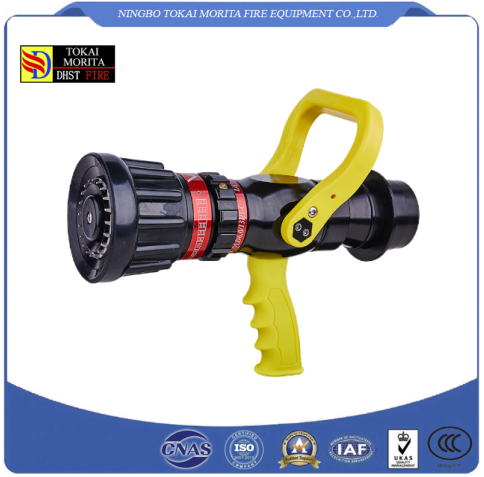
Mapping specific flow rates to tactical applications ensures suppression success. You must evaluate fire loads and extinguishing agents. Different scenarios demand vastly different water volumes. Applying the wrong GPM wastes water or endangers crews. Water absorbs heat. One gallon of water absorbs approximately 9,330 BTUs when heated from 60 degrees Fahrenheit and converted to steam. You must deliver enough gallons to absorb the BTUs generated by the fire.
Low-flow settings serve specific, limited use cases. Crews use them for overhaul operations, dumpster fires, and incipient stage fires. Wildland firefighting often utilizes 3/4-inch or 1-inch forestry hose with nozzles flowing 30 to 40 GPM. These rates conserve water during mop-up operations where water supply is limited to the tank on the brush truck.
However, low flow presents severe limitations for structural firefighting. Flowing 60 GPM into a fully involved room will not absorb enough BTUs. The water flashes to steam without extinguishing the seat of the fire. The fire continues to grow, and the resulting steam expansion can burn the nozzle operator. Never use low-flow settings for interior structural attack.
Structural attack requires a robust decision framework. A 95 125 150 200 GPM nozzle covers the most common structural flows. Modern residential fire loads feature heavy synthetic materials like polyurethane foam in couches and mattresses. Synthetics burn hotter and faster than legacy wood furnishings, producing massive amounts of black, toxic smoke and rapid heat release rates.
Compare the cooling capacity of 150 GPM versus 200 GPM. A 150 GPM stream absorbs roughly 1.4 million BTUs per minute. A 200 GPM stream absorbs nearly 1.8 million BTUs per minute. The 200 GPM stream knocks down synthetic fires rapidly, increasing survivability for trapped victims. However, advancing a 200 GPM line brings physical realities. The nozzle reaction requires dedicated backup personnel. Limited staffing often restricts departments to 150 GPM attack lines to ensure a single firefighter can maneuver the hose.
Fires exceeding the capacity of handlines require master streams. These flows exceed 350 GPM. Deck guns, ground monitors, and aerial ladder pipes deliver massive knockdown power. They easily reach 1,000 to 2,000 GPM. Handheld operation is no longer physically viable at these volumes. The reaction force would throw a firefighter across the street.
Master streams require secure mounting and large diameter supply lines, typically 4-inch or 5-inch hose. They are defensive tools designed for surround-and-drown operations. When a building is structurally compromised and interior attack is abandoned, master streams provide the volume necessary to extinguish heavy commercial fire loads and protect adjacent exposures.
Flow rates must match your extinguishing agents. Applying foam on Class B fires requires precise proportioning. Flow rates must align perfectly with foam eductors. If you use a 95 GPM inline eductor, the nozzle at the end of the line must flow exactly 95 GPM. Mismatched flows prevent the venturi effect inside the eductor.
If the nozzle flows 125 GPM but the eductor is rated for 95 GPM, the system will fail to draft the foam concentrate from the bucket. You will just spray plain water onto a liquid fuel fire, which can spread the burning fuel and worsen the situation. Always verify that your nozzle GPM matches your foam equipment before initiating a Class B attack.
Your nozzle must physically integrate with existing department infrastructure. Scalability and compliance drive procurement. Buying a high-performance tool is useless if it does not fit your hoses. System compatibility dictates fireground efficiency. You must audit your current hose threads, diameters, and pump capacities before purchasing new hardware.
Matching nozzle threads to department hoses prevents catastrophic delays. A 1.5 inch NST fire hose nozzle utilizes National Standard Thread (NST), also known as National Hose (NH). This is the most common thread standard in the United States. However, some regions and industrial facilities use National Pipe Straight Hose (NPSH) threads. Cross-threading these standards damages equipment, causes severe leaks, and can result in the nozzle blowing off the hose under pressure.
Hose sizing also dictates maximum efficient GPM. Traditional 1.5-inch hoses suffer massive friction loss above 125 GPM. Pushing 150 GPM through a 1.5-inch hose requires dangerously high pump pressures. Standard 1.75-inch hoses handle 150 GPM efficiently. Modern 1.88-inch "combat ready" hoses allow 200 GPM flows while keeping friction loss manageable, bridging the gap between a 1.75-inch handline and a 2.5-inch heavy attack line.
The shutoff mechanism controls water delivery mechanics. A fire hose nozzle with shutoff typically uses a ball valve or a slide valve. Ball valves are common, durable, and easy to manufacture. They feature a spherical core with a hole through the center. However, gating a ball valve halfway creates internal turbulence. The water strikes the edge of the ball, distorting the stream pattern and reducing reach.
Slide valves control flow without altering the waterway shape. A cylindrical piston slides forward to restrict the flow. They provide excellent stream quality even when partially gated. A smooth-operating shutoff handle (bale) is critical. It helps operators control water hammer. Opening or closing the valve too quickly sends a shockwave down the hose, which can burst the jacket or damage the fire engine's pump.
Relying solely on pump panel gauges is dangerous. Water pressure measured at the fire engine does not guarantee nozzle delivery. Kinks in the hose, elevation changes up stairwells, and inaccurate friction loss charts alter the final output. You must verify actual GPM at the nozzle.
Departments should use inline flow meters during training to validate their setups. Follow these steps to conduct a flow test:
Connect an inline flow meter directly to the pump discharge.
Deploy 200 feet of your standard attack hose.
Attach the target nozzle and secure it to a monitor or have two firefighters brace it.
Throttle the pump to the calculated discharge pressure.
Read the actual GPM on the flow meter and adjust the pump pressure until the target GPM is achieved.
Record this actual pump pressure for future fireground operations.
Value influencing factors separate budget nozzles from duty-rated professional tools. Procurement requires analyzing long-term durability and operational support. You must look beyond the initial purchase price and evaluate how the equipment will survive daily abuse on the fireground.
Material construction dictates lifespan and weight. Hard-anodized aluminum dominates the modern market. It offers excellent corrosion resistance and remains lightweight. Extruded aluminum with Type III hardcoat anodizing withstands drops on concrete and resists scratching. Brass nozzles are incredibly durable and resist impact damage well. They are common in industrial and marine environments. However, brass adds significant weight, increasing operator fatigue during long interior pushes.
Composite materials offer extreme weight reduction but may lack long-term impact tolerance. Evaluate an adjustable flow handheld nozzle based on your department's specific abuse levels. If your crews frequently drop nozzles from ladders or drag them across asphalt, invest in high-grade aluminum with heavy-duty rubber bumpers.
Assess long-term upkeep expenses before purchasing. Complex nozzles require more maintenance. Field-stripping should be straightforward. Replacing spinning teeth, flushing trapped debris, and lubricating the shutoff valve trunnions must be simple tasks that the station crew can perform. If the nozzle requires factory service for basic cleaning, it will spend too much time out of service.
Adjustable and automatic nozzles require significantly more operator training. Crews must understand how baffle adjustments affect pump operations. They must know how to clear debris by flushing the nozzle wide open. Fixed-gallonage or smooth bores require minimal training. Choose equipment that matches your department's training bandwidth and maintenance capabilities.
Partnering with a reliable firefighting nozzle supplier guarantees operational readiness. Use a strict checklist for evaluating manufacturers. Demand clear warranty terms that cover fireground damage. Request NFPA 1964 compliance documentation. This standard requires rigorous testing, including salt spray corrosion tests, rough usage drop tests, and hydrostatic burst testing.
Ensure replacement parts are readily available domestically. A reputable supplier will provide demo units. They should encourage department flow testing before you commit to a fleet-wide purchase. Never buy a nozzle based on a catalog photo. Put it on your hose, flow water through it, and measure the reaction force yourself.
There is no universal best flow rate. The optimal GPM remains a calculated balance. You must weigh the target fire load against available staffing for nozzle reaction. Pump capacity and hose diameter ultimately dictate your ceiling. Relying on outdated friction loss charts compromises safety. You must know exactly what your equipment delivers under real-world conditions.
Departments must conduct physical flow testing. Use inline flow meters before standardizing on a specific nozzle type. Ensure that theoretical GPM matches actual delivery. Shortlisting logic demands rigorous field trials. Do not buy equipment based solely on catalog specifications. Test the ergonomics, measure the reaction force, and evaluate the stream quality.
Take the following steps to optimize your water delivery:
Audit your current hose and nozzle inventory to identify thread or flow mismatches.
Calculate your average friction loss using inline flow meters during your next training drill.
Evaluate your typical staffing levels to determine the maximum safe nozzle reaction force.
Consult with a certified supplier to arrange a field demonstration of modern low-pressure nozzles.
A: The typical range is 150 to 185 GPM. Pushing flows beyond 185 GPM in a standard 1.75-inch hose creates prohibitive friction loss. Many departments are adopting 1.88-inch hoses to achieve 200 GPM flows while keeping pump discharge pressures manageable.
A: GPM increases with the square root of the pressure. Higher PSI pushes more volume through the exact same orifice. If you increase the pump pressure, the nozzle will flow more water, but it will also exponentially increase the nozzle reaction force pushing back on the operator.
A: While mechanically possible on many models, manufacturer guidelines often advise caution. It is generally safer to gate the valve slightly to reduce pressure before rotating the baffle collar. This prevents sudden spikes in nozzle reaction, unlike stacked tips which require a complete shutdown.
A: You are experiencing a deceptive stream. The automatic nozzle's internal spring maintains 100 PSI of reach by shrinking the orifice when water supply is low. The stream looks powerful, but it is delivering an inadequate GPM volume to absorb the fire's thermal energy.
A: General industry consensus states that continuous flows above 150 to 175 GPM require a backup firefighter. Flows in this range generate approximately 60 to 70 lbs of reaction force. Handling this force alone causes rapid fatigue and compromises safe line advancement.
A: Yes. High-GPM fog patterns entrain massive amounts of air. They act like fans, potentially altering flow paths and pushing heat into uninvolved areas. Smooth bore nozzles entrain significantly less air, allowing crews to apply water without disrupting the thermal layering.
A: NFPA 1964 outlines strict manufacturing and performance standards for spray nozzles. It requires specific flow accuracy tolerances, rigorous hydrostatic testing for burst pressure, and standardized operational controls to ensure durability and reliability in extreme fireground conditions.


